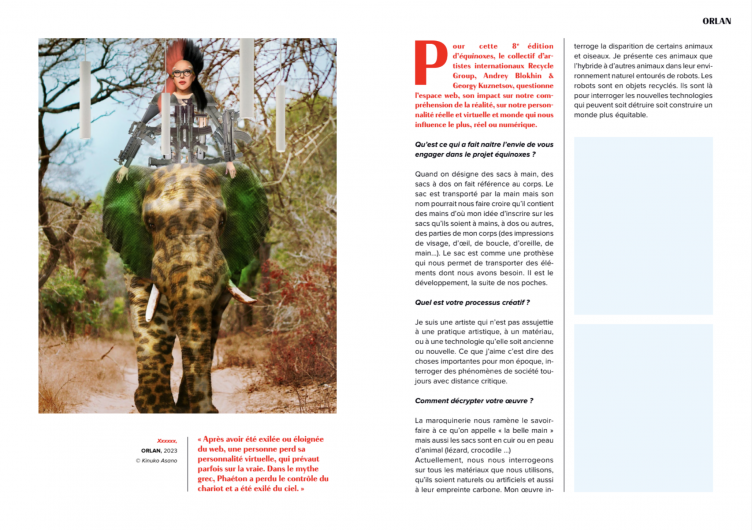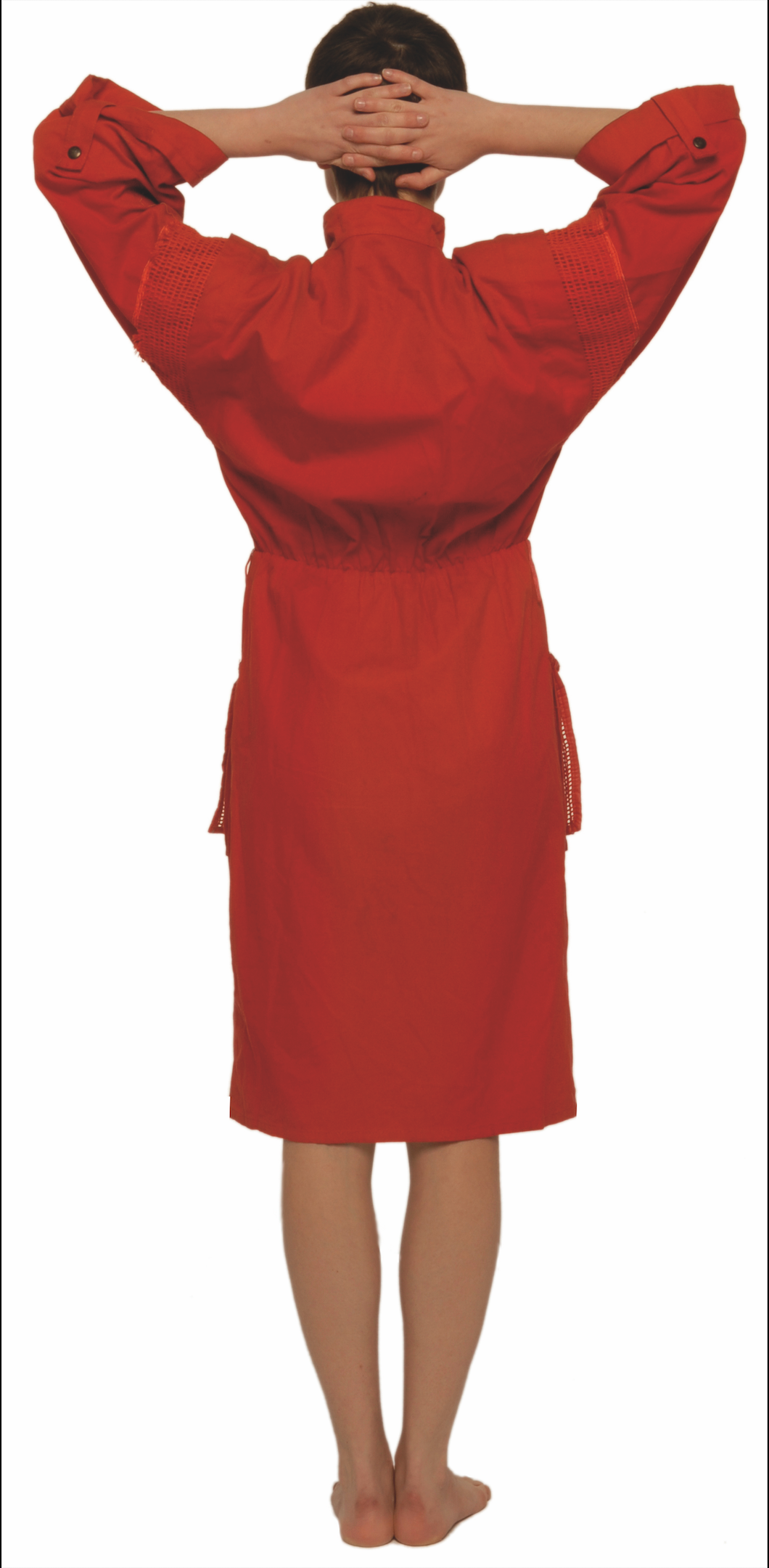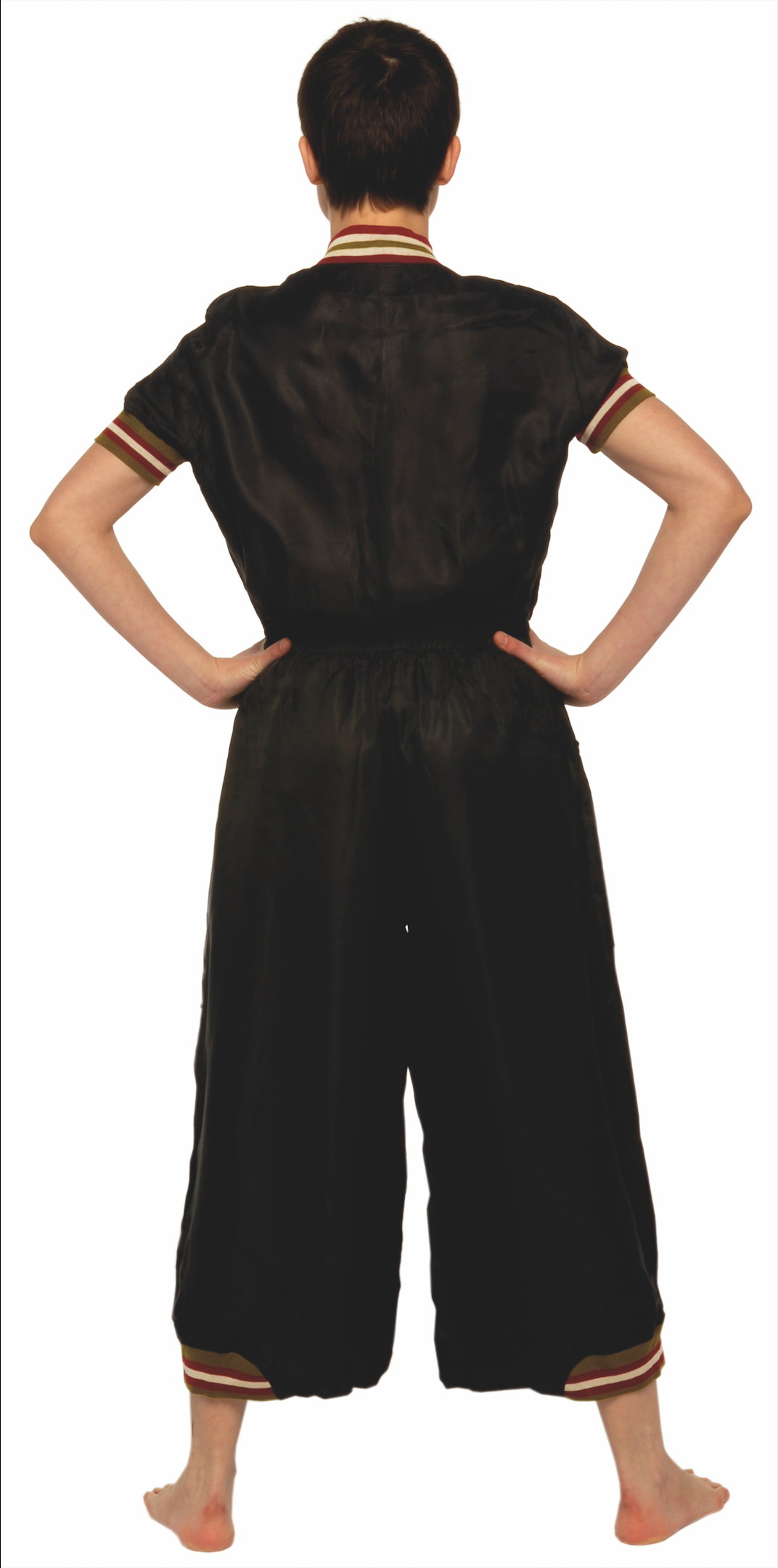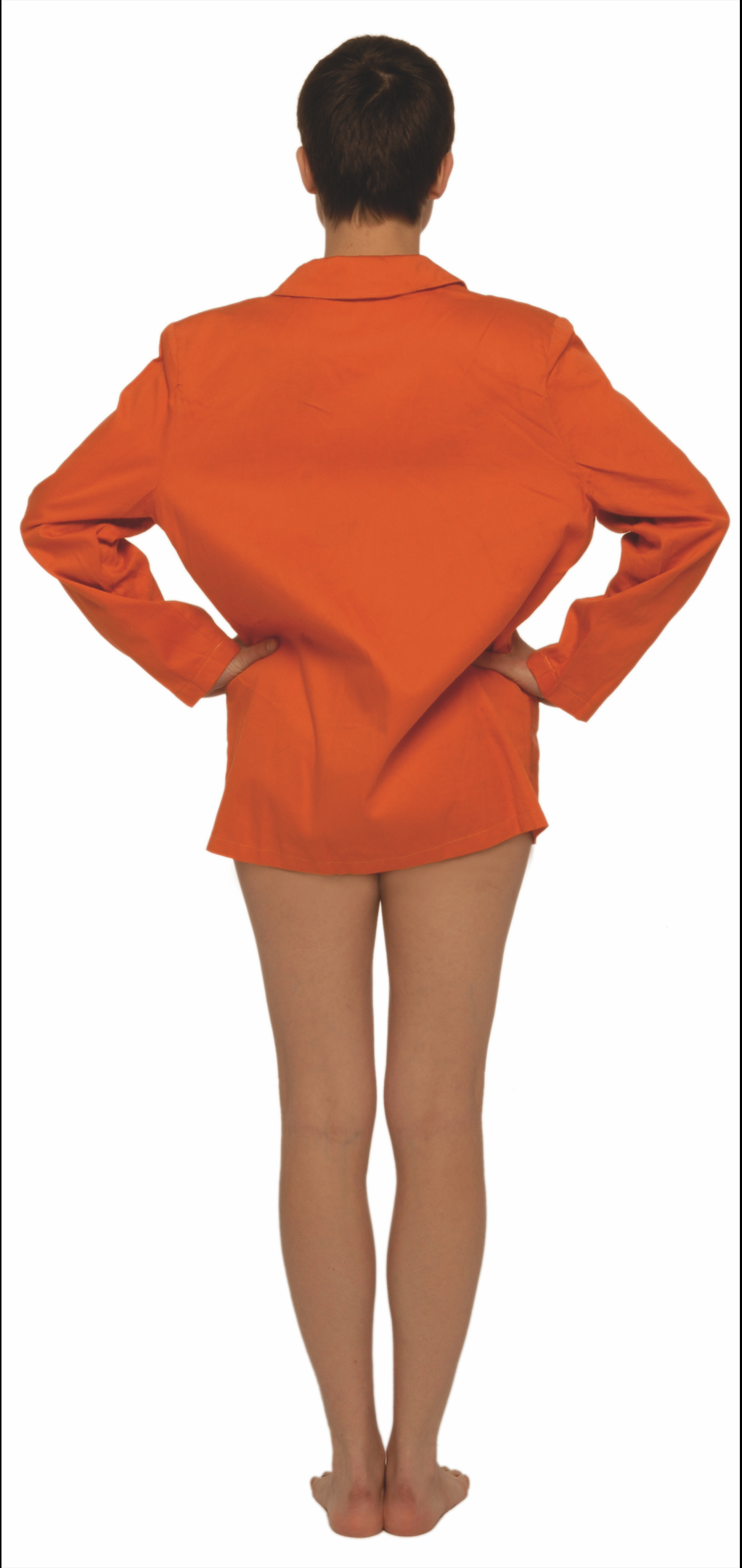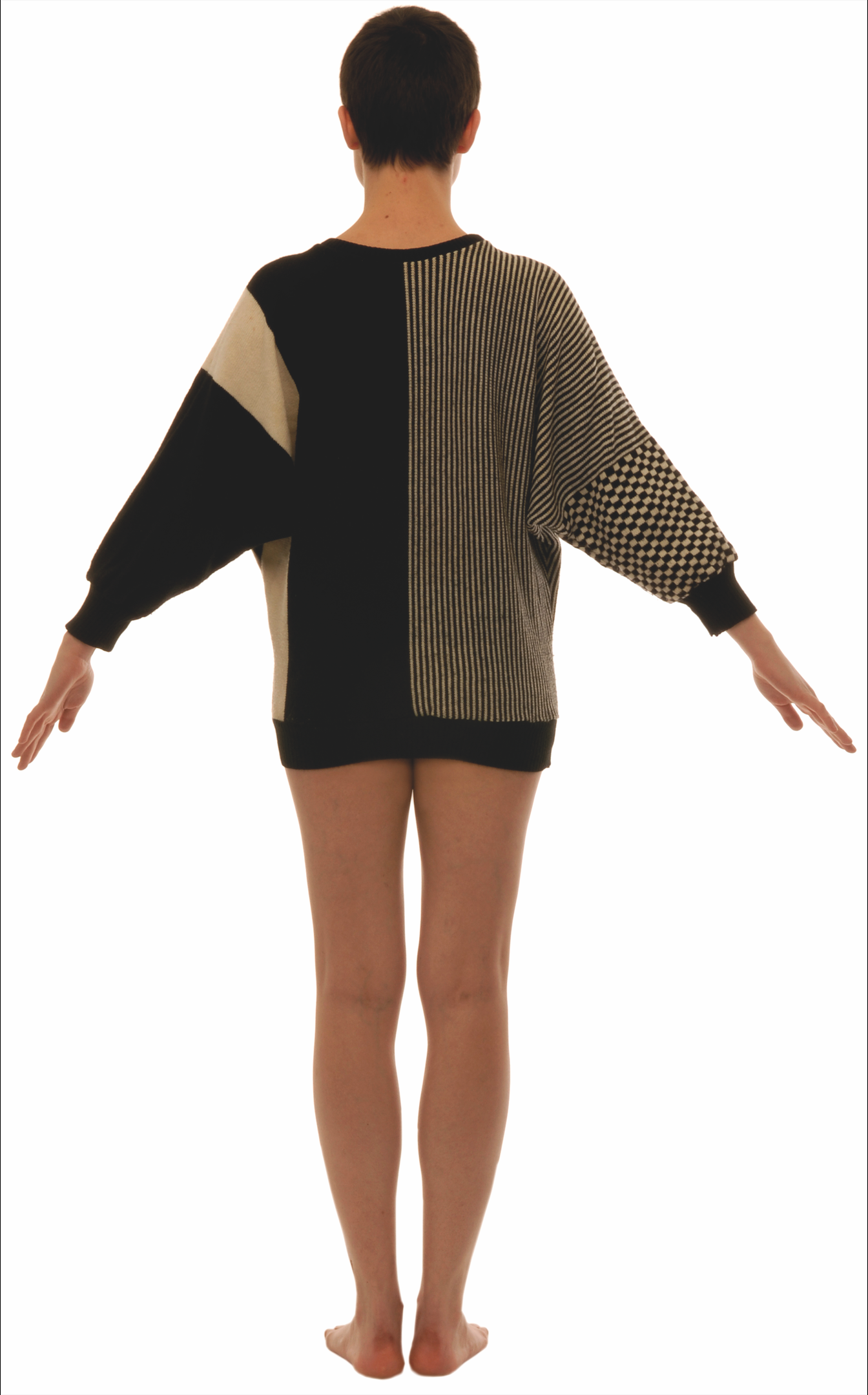
A mobile ORLAN-CORPS or the design of a SMART car that’s getting smarter and smarter, 2026
In recent years, we have become more acutely aware of a reality that has long remained invisible: we are inhabited, covered, and permeated by billions of living beings. Bacteria, microbes, viruses, phages, spores, fungi… a multitude of organisms coexist on and within us, forming a complex and dynamic ecosystem. This presence influences our health, our biological balance, our emotions, and our moods.
The pandemic has suddenly brought this microscopic world into sharp focus. What was once an abstraction has become concrete and tangible in our daily actions, our fears, and our precautions. We have established physical distance between bodies, permanently transforming the ways we relate to one another (a social phenomenon that ORLAN explores).
The artist often works at the intersection of art and science, incorporating biotechnology. In 2007, she created a work in Perth in collaboration with the Symbiotica laboratory and BioART theorist and curator Jens Hauser, The Harlequin’s Cloak, a work in which she cultivates her own cells alongside those from other human and animal sources.
ORLAN has developed a reflection on the figure of the harlequin, based on the text by philosopher Michel Serres, *Le Tiers-Instruit*. In the preface titled Secularism, the harlequin, after traveling around the world while gradually shedding his patchwork clothes, reveals skin that is itself made up of fragments and marks tattooed by what he has seen and encountered. Yet he is unaware that everything he has seen has deeply shaped, transformed, and blended him—just as when we move about, travel, and encounter different cultures. This philosophical tale makes the harlequin a metaphor for multiculturalism and the acceptance of others within oneself.
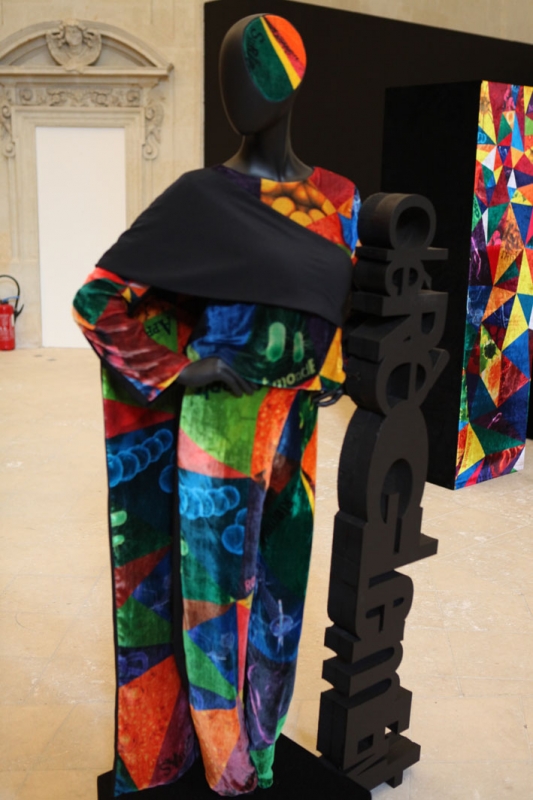
In 2010, for his monumental installation *Un bœuf sur la langue* at the Musée de Nantes, ORLAN collaborated with the Brochier silkworks to create a silk velvet printed with a harlequin-like pattern composed of viruses—some deadly, others, like phages, life-giving—as well as bacteria, spores, fungi, and blood, skin, and muscle cells.
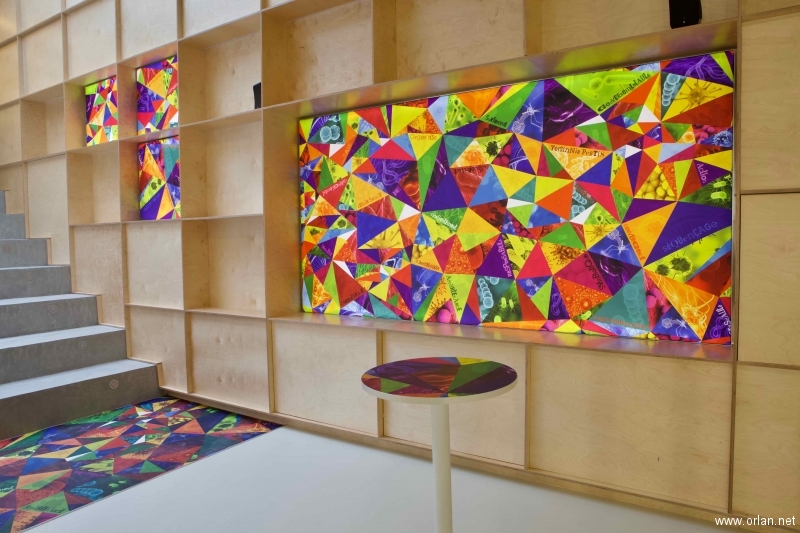
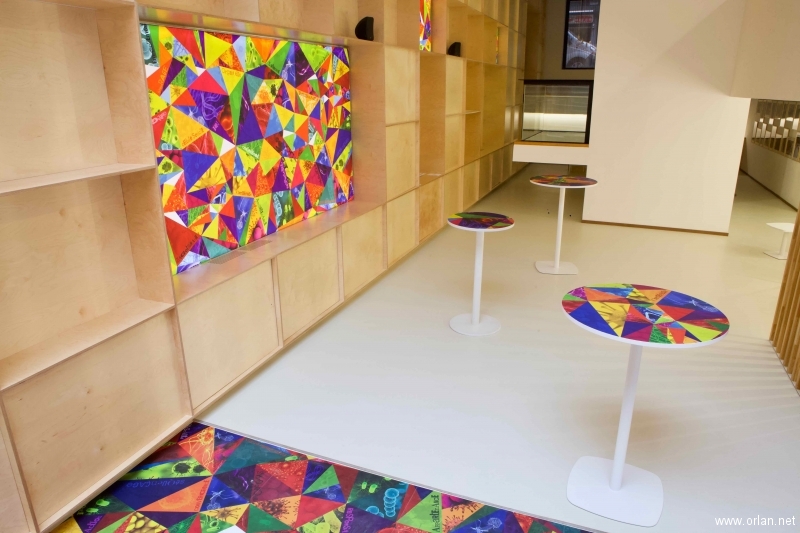
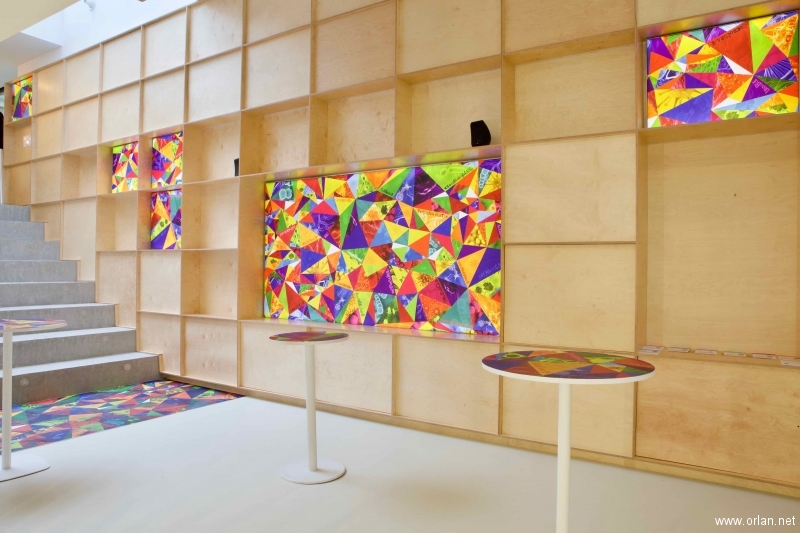
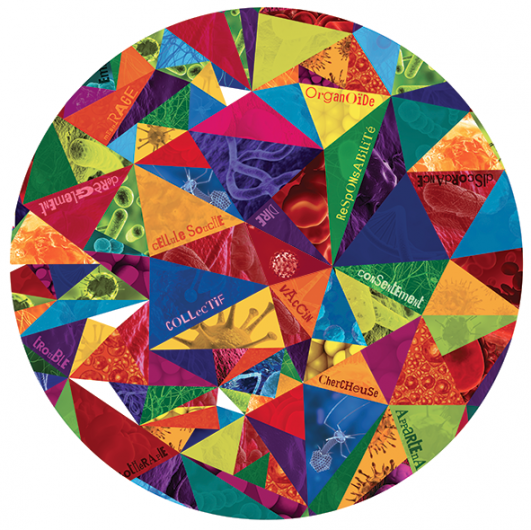
In 2018, Fabrice Hyber invited ORLAN to participate in the project ORGANOÏDE at the Pasteur Institute to create a permanent installation in the OMICS auditorium featuring new images depicting the microbiome, including the words “stem cell,” “fangotherapy ,” “rage,” “Pasteurella pestis,” “vaccine,” and even “researcher”…
In 2026, the artist revisits this theme by customizing her car with “festive” colors to bring a unique and joyful touch to a gray city and combat the standardization and stereotypes surrounding vehicles. ORLAN makes her SMART even smarter!
This action transforms the car body into a hybrid surface where biological and symbolic signs intermingle. The object becomes a magnifying glass, revealing what our eyes could not perceive: the infinitely small. The car thus becomes a mobile extension of the harlequin body, a space of circulation inscribed with the traces of life in all its complexity. The patchwork is no longer merely textile or skin-based, but also mechanical and social: it covers a vehicle, highlighting the flows, exchanges, and crossings that shape human identity. The pattern becomes a sensory cartography of life, where viruses and cells evoke both the fragility and the power of interactions, offering a vision of an augmented body, scattered throughout public space.
On the occasion of her retrospective at the Ceysson & Bénétière Gallery in Saint-Étienne in 2025, ORLAN pays tribute to the great pioneers in history who championed the same causes as she did—but long before her—and some of whom gave their lives for them.
Corrugated cardboard stool with ” Arlequinades,” Paris Arty Show, 2025
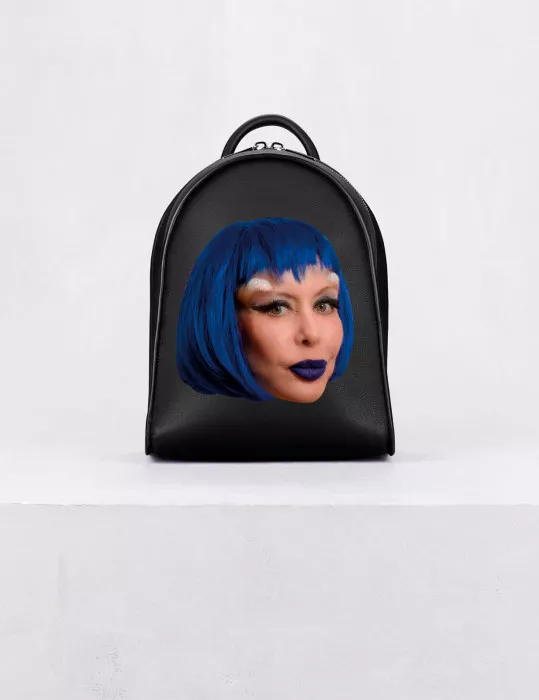
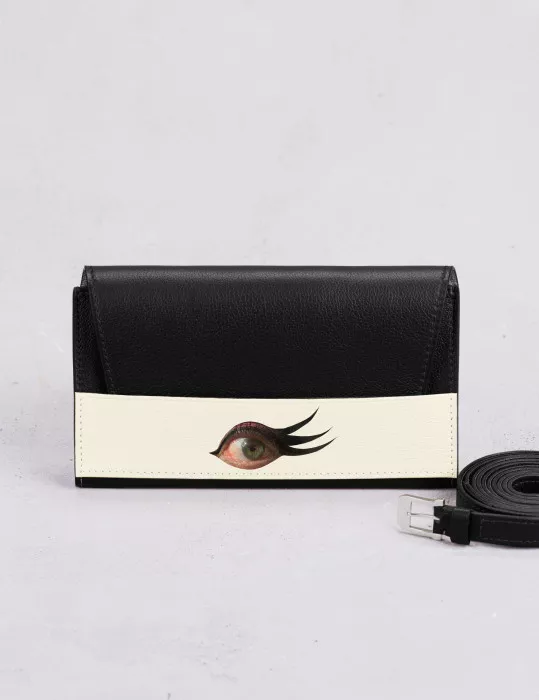
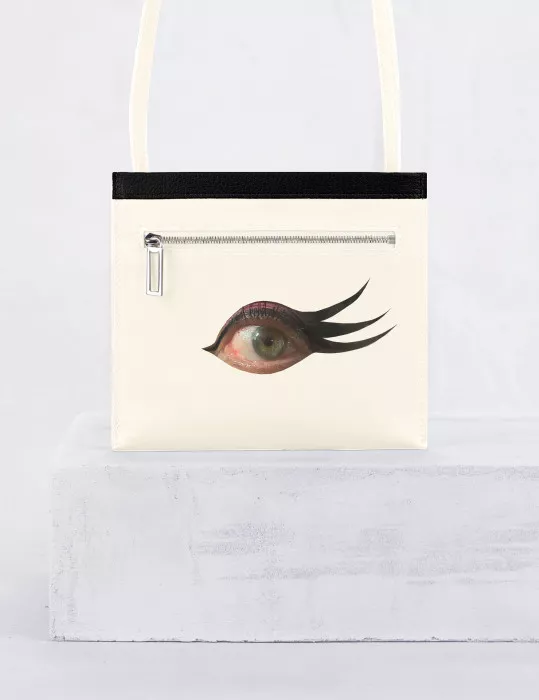
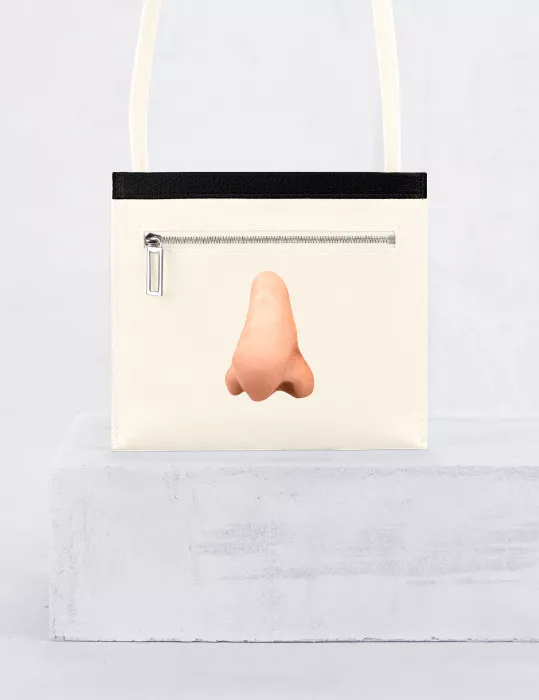
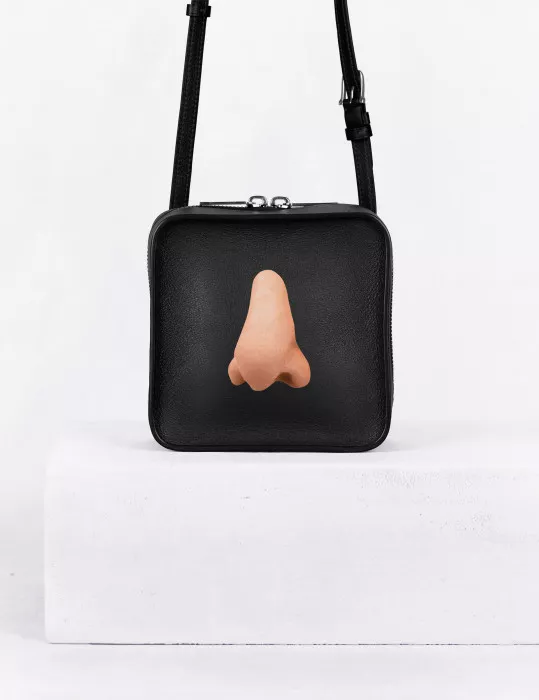
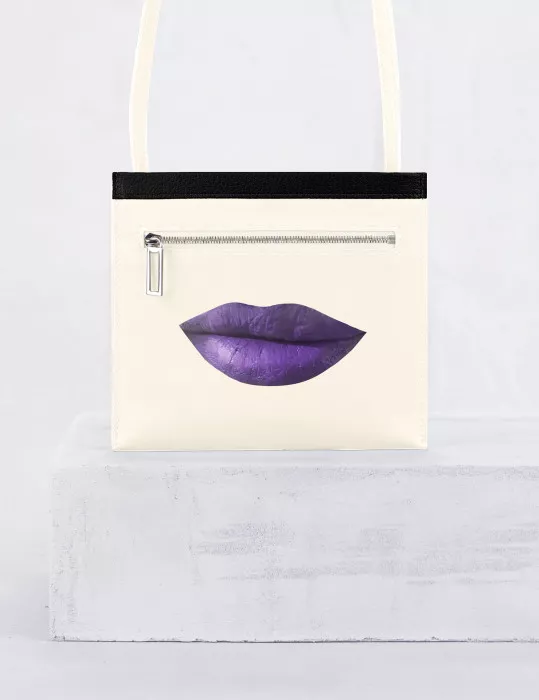
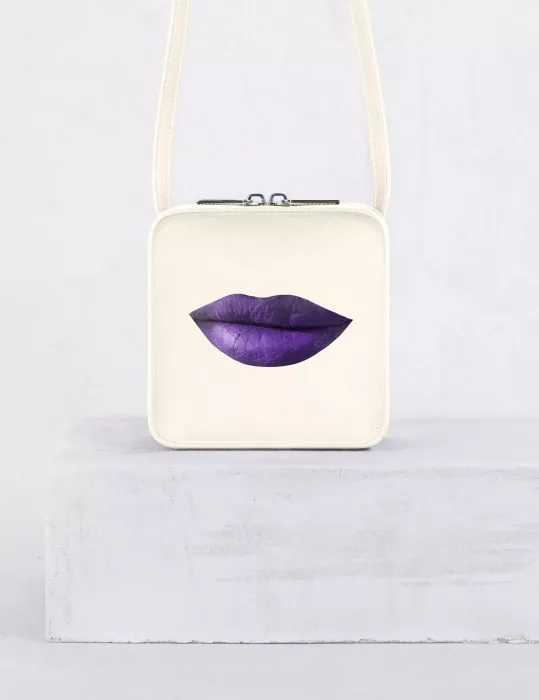
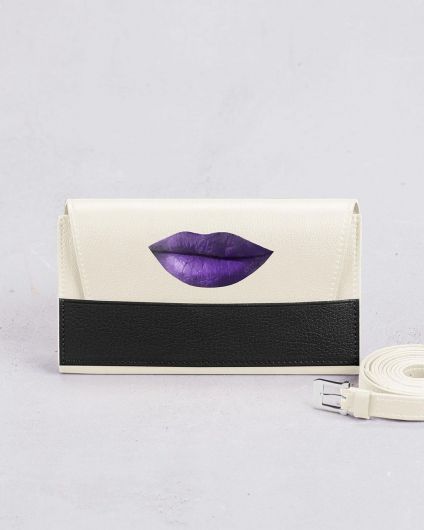
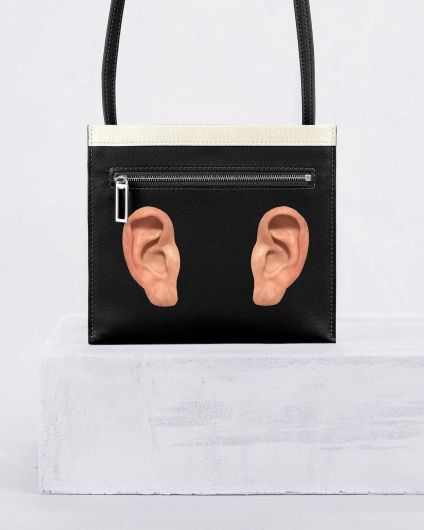
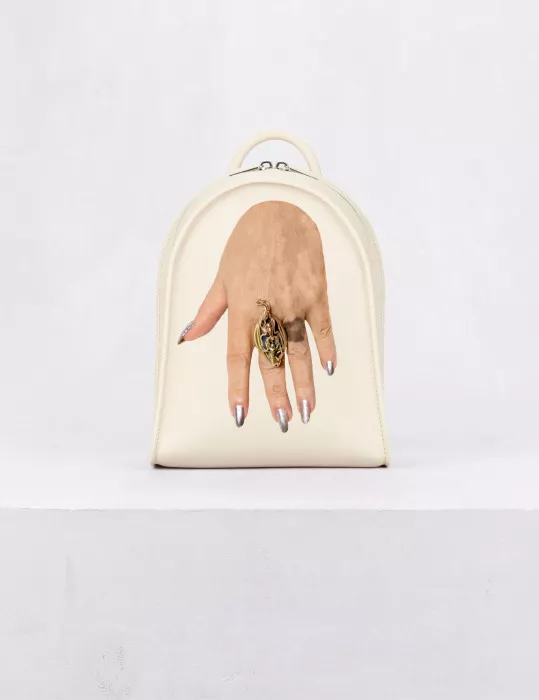
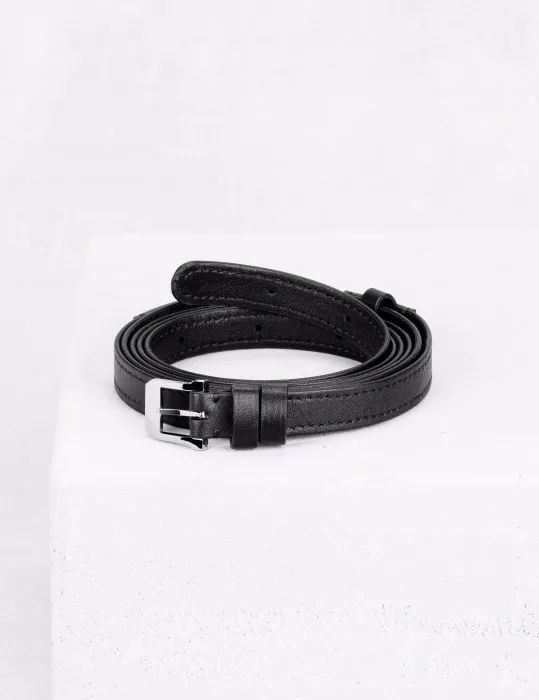
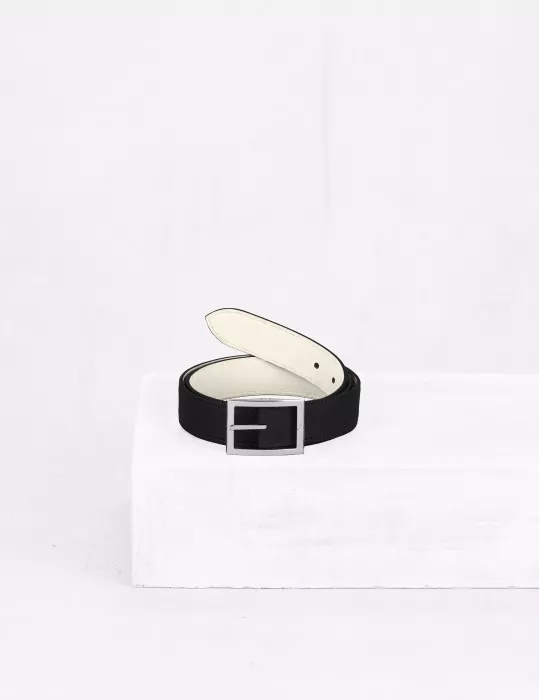
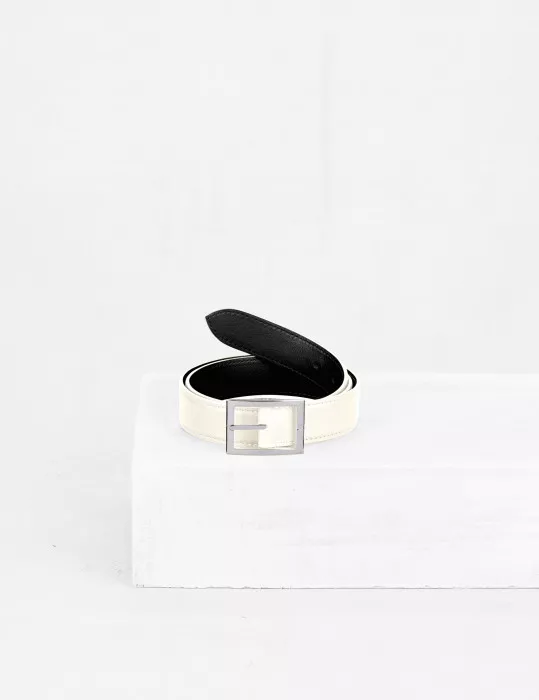
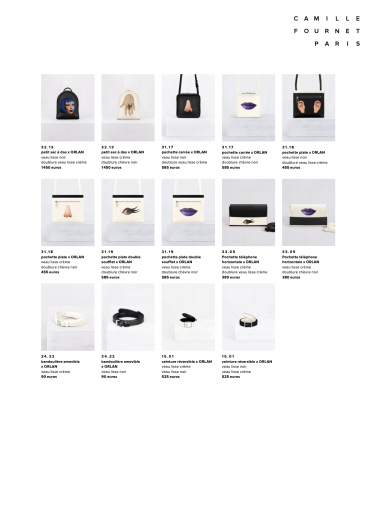
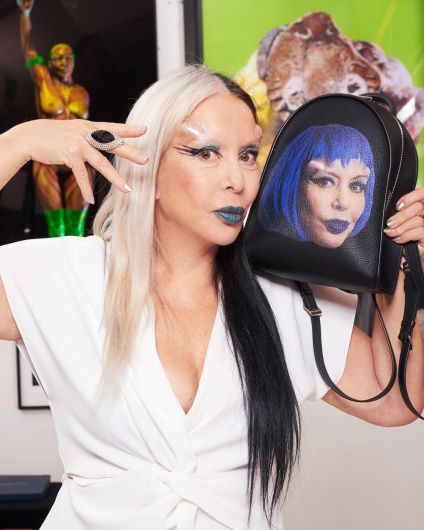
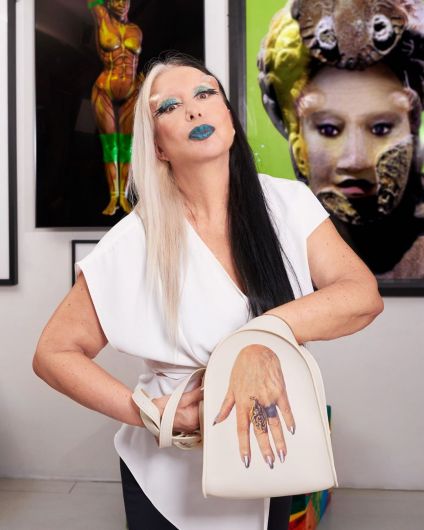
ORLAN X CAMILLE FOURNET, capsule collection “From Body to Body”
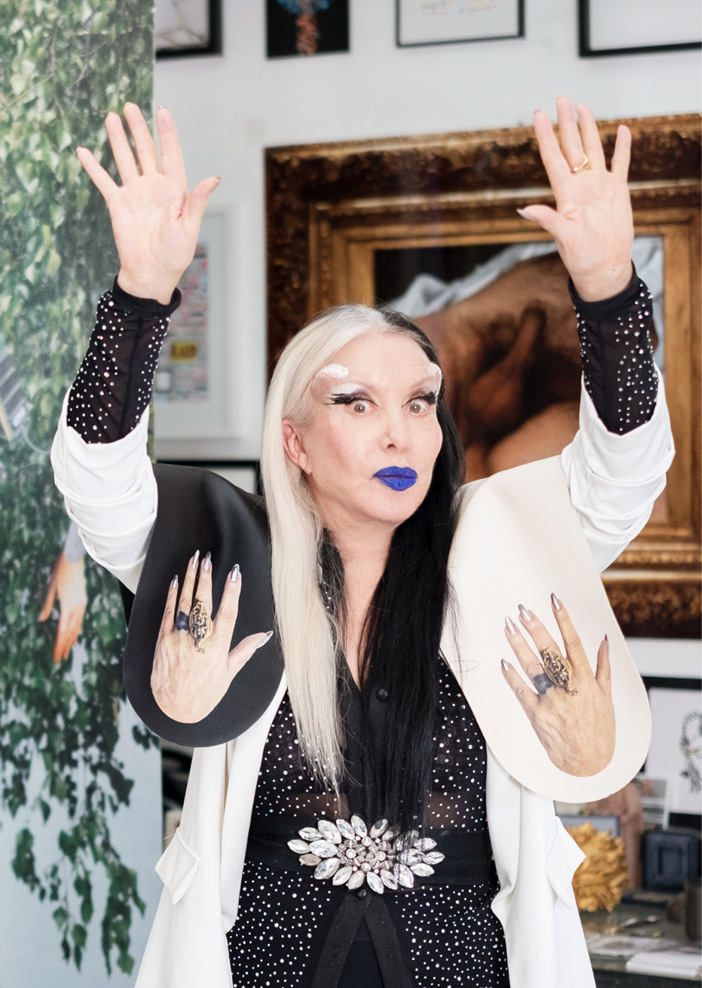
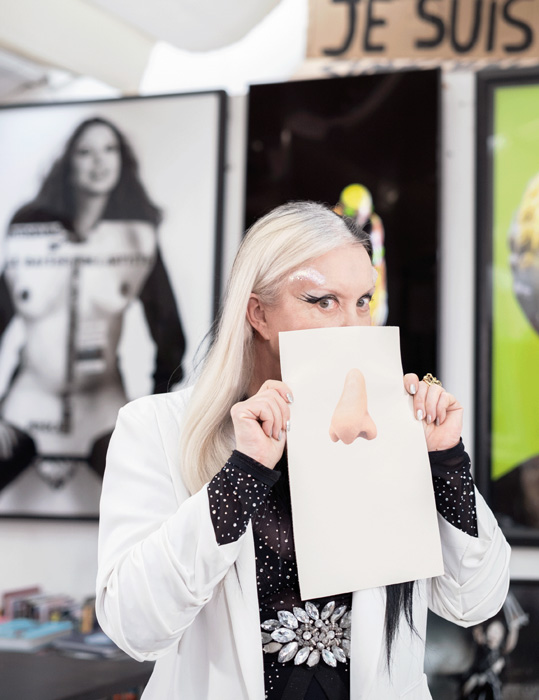
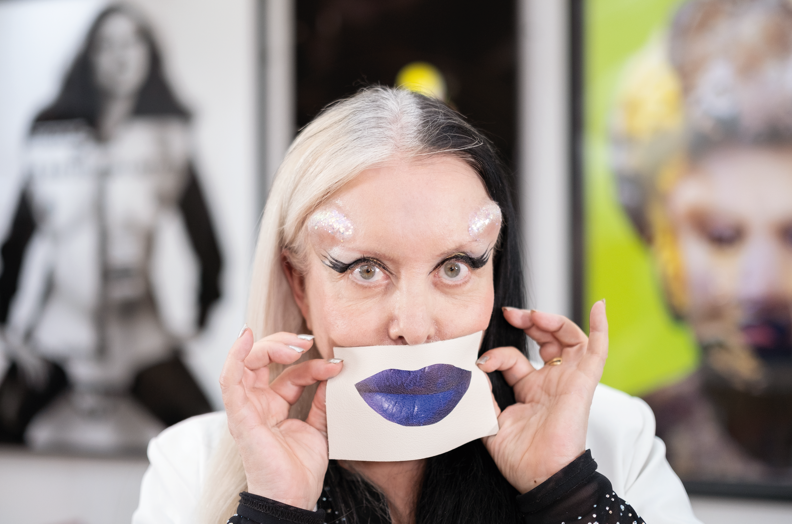
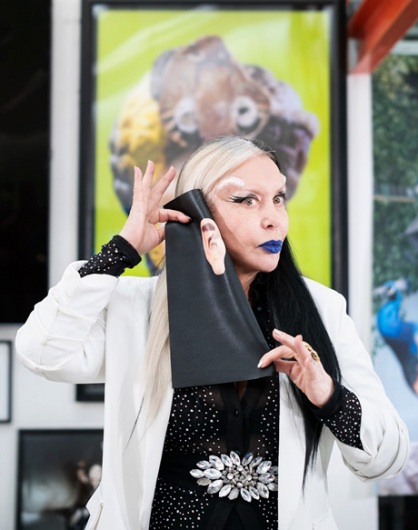
An eye, a mouth, a nose: “the body is a bag, the body is a suit”. With this new creation, ORLAN becomes part of the leather and flesh of the Camille Fournet house. This encounter enables the artist to break down the ice walls between practices, creating porosities between the visual arts, luxury goods and leather goods.
An international artist, carnal, feminist and always in capital letters, ORLAN has created an exceptional collection for the Maison, featuring fragments of her body in quotations from her landmark work “Se vendre sur les marchés en petits morceaux” (“Selling oneself in small pieces on the market”).
ORLAN has long used the representation of her body to question current social phenomena from a critical distance. When we designate handbags and backpacks, we’re referring to the body. The bag is carried by the hand, but its name could lead us to believe that it contains hands, hence the idea of inscribing parts of the artist’s body on the bags, whether they are hand-held, back-held or other (impressions of the face, eye, ear, ear, hand…). The bag is like a prosthesis that allows us to carry the things we need. It is the development, the continuation of our pockets.
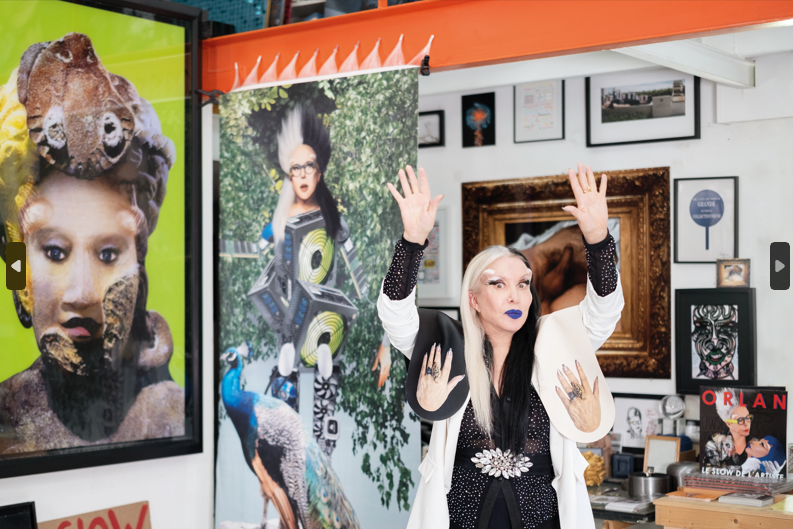
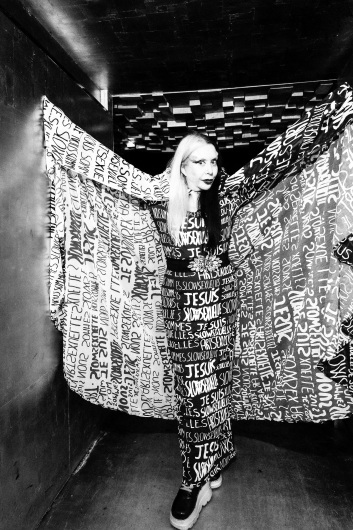
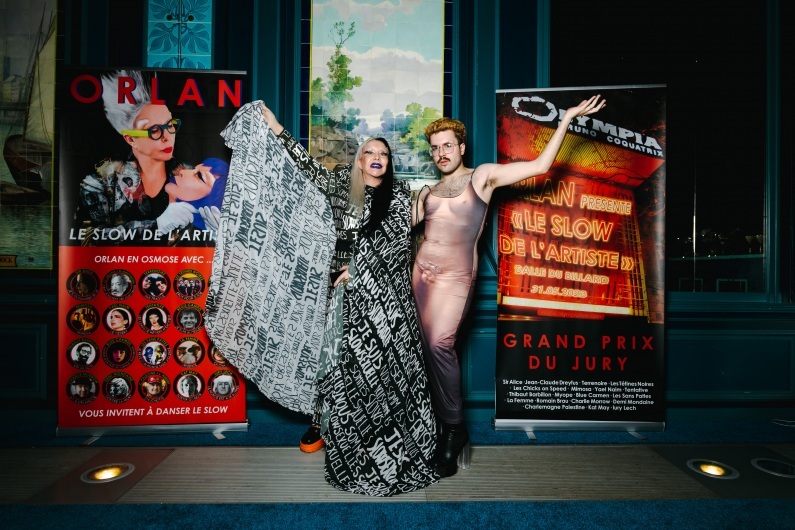
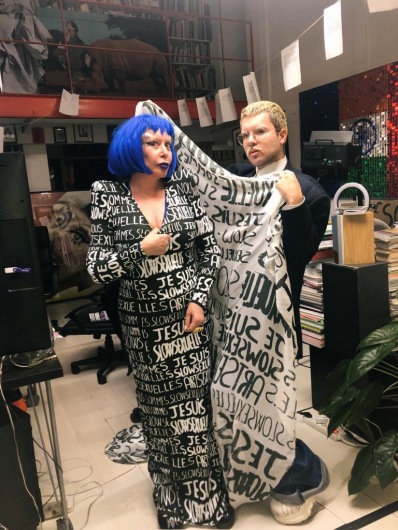
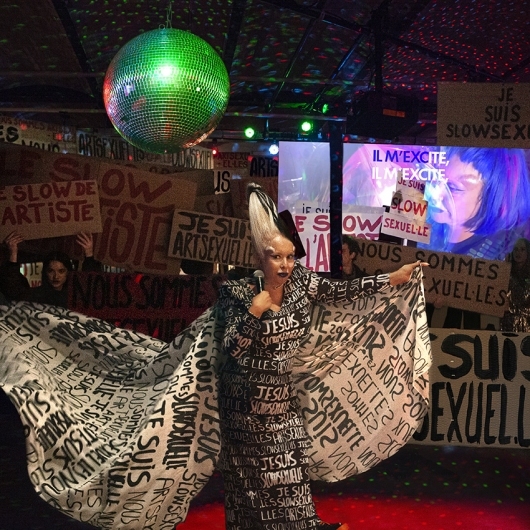
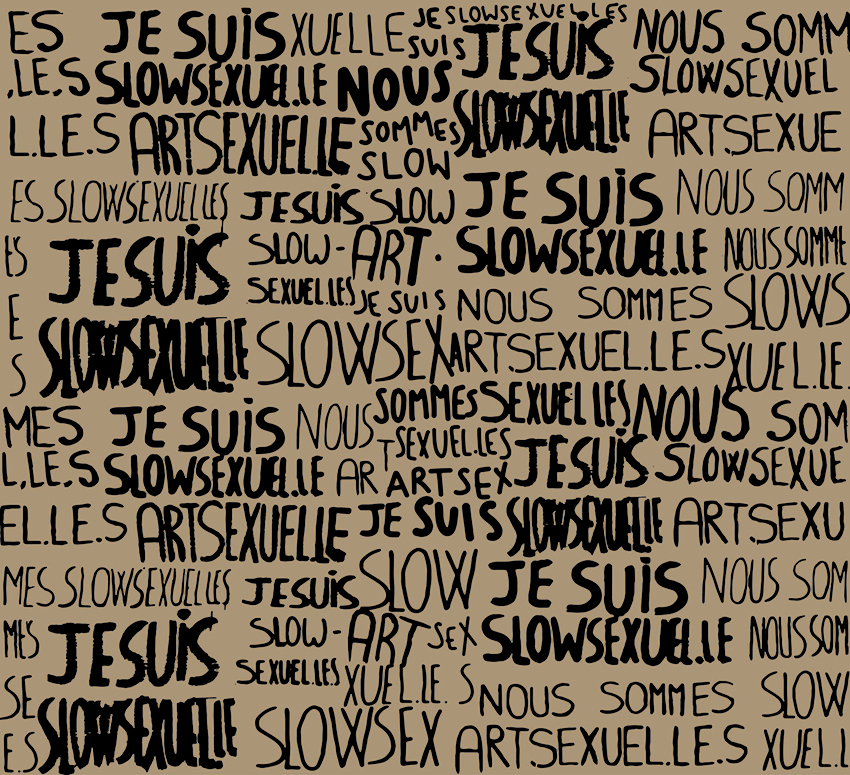
The artist’s “Slow” costume, by Beñat Moreno, 2023
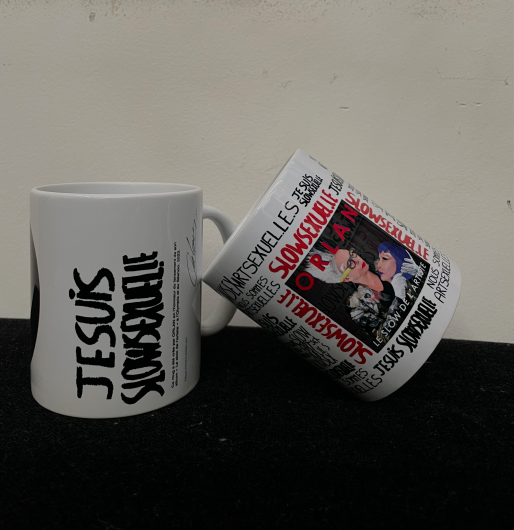
For the launch of her first musical album, Le Slow de l’Artiste, ORLAN collaborated with Beñat Moreno to create a costume that she uses for promotion, clips and live performances. He created a lycra dress and muslin cape with a textile print featuring the project’s slogans, “JE SUIS SLOWSEXUEL.LE”, “NOUS SOMMES SLOWSEXUEL.LE.S”, “JE SUIS ARTSEXUEL.LE”, “NOUS SOMMES ARTSEXUEL.LE.S”, all in black and white. With this costume, ORLAN becomes a manifesto, visually embodying her concept.
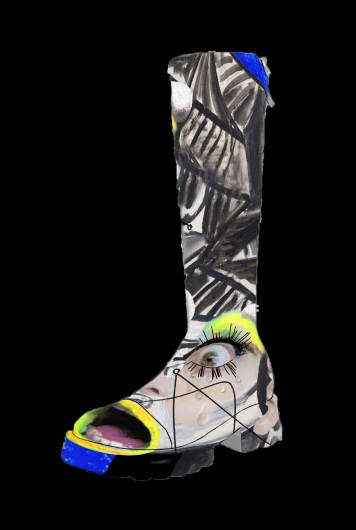
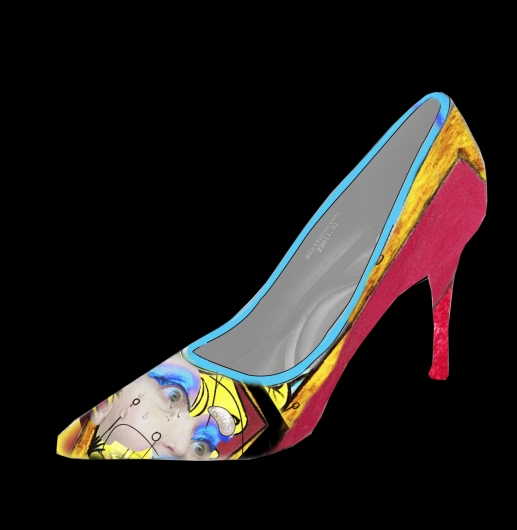
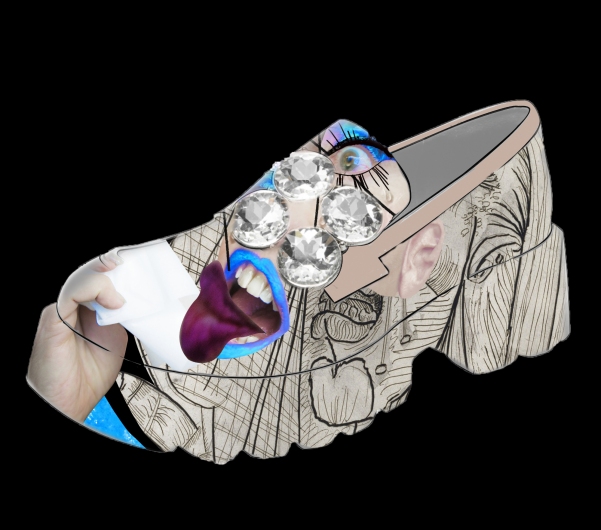
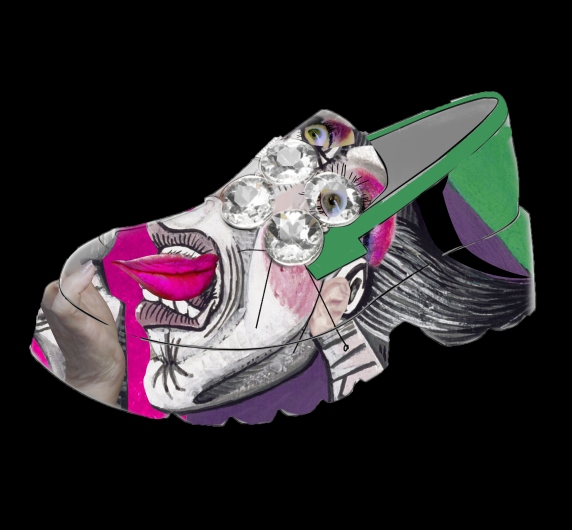
” Women Who Cry Are Angry ” Collection , 2022–2025
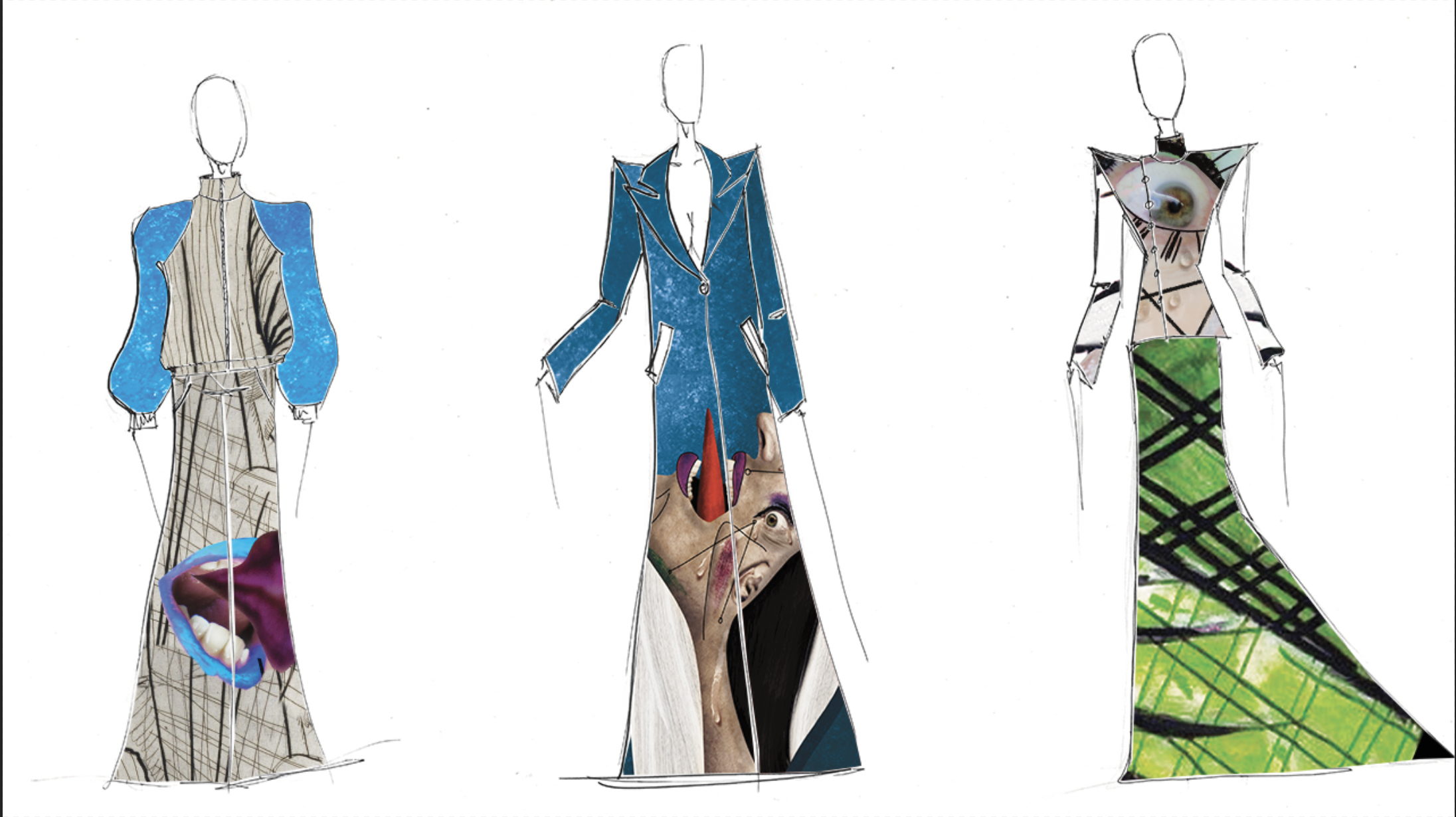
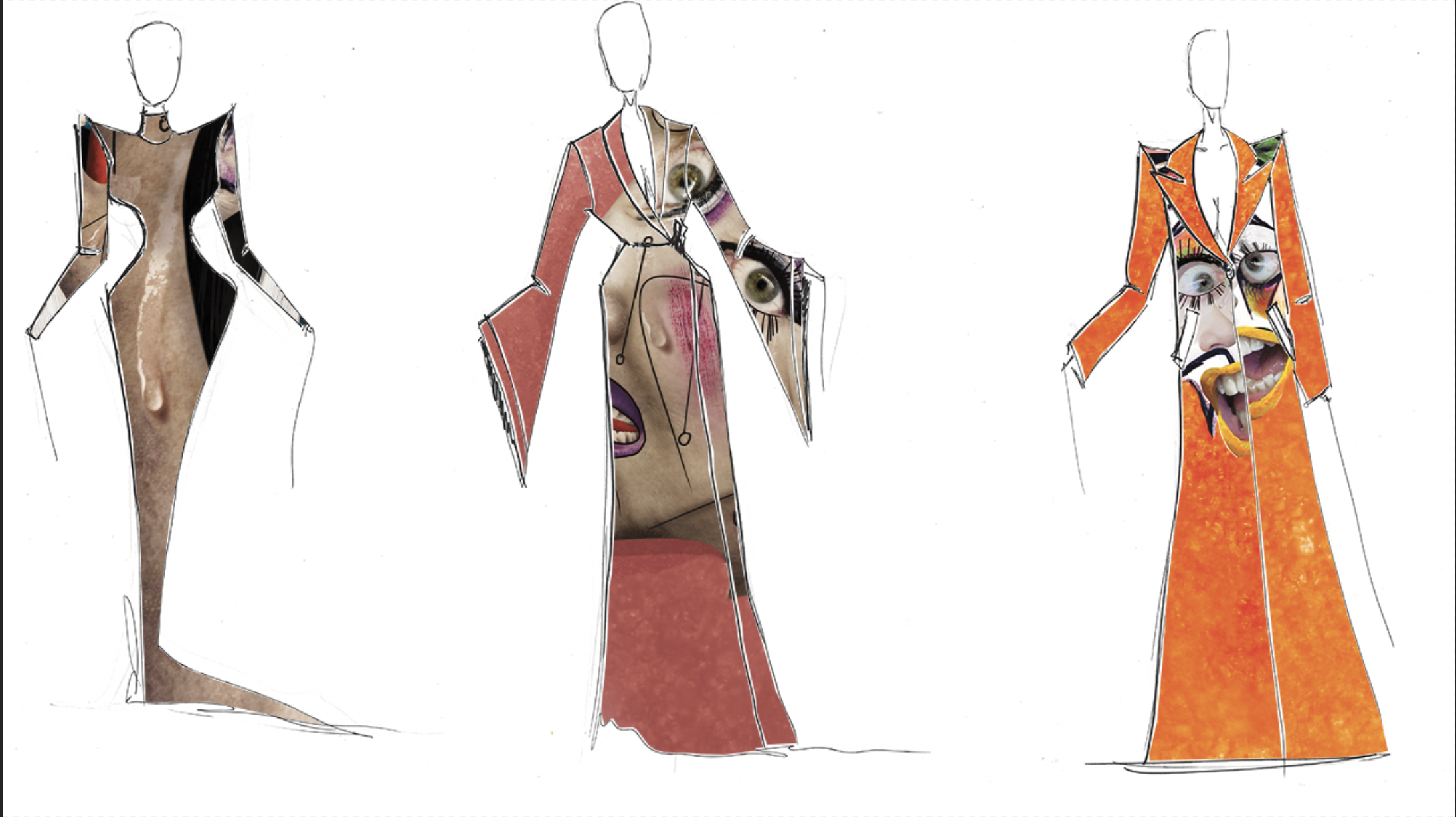
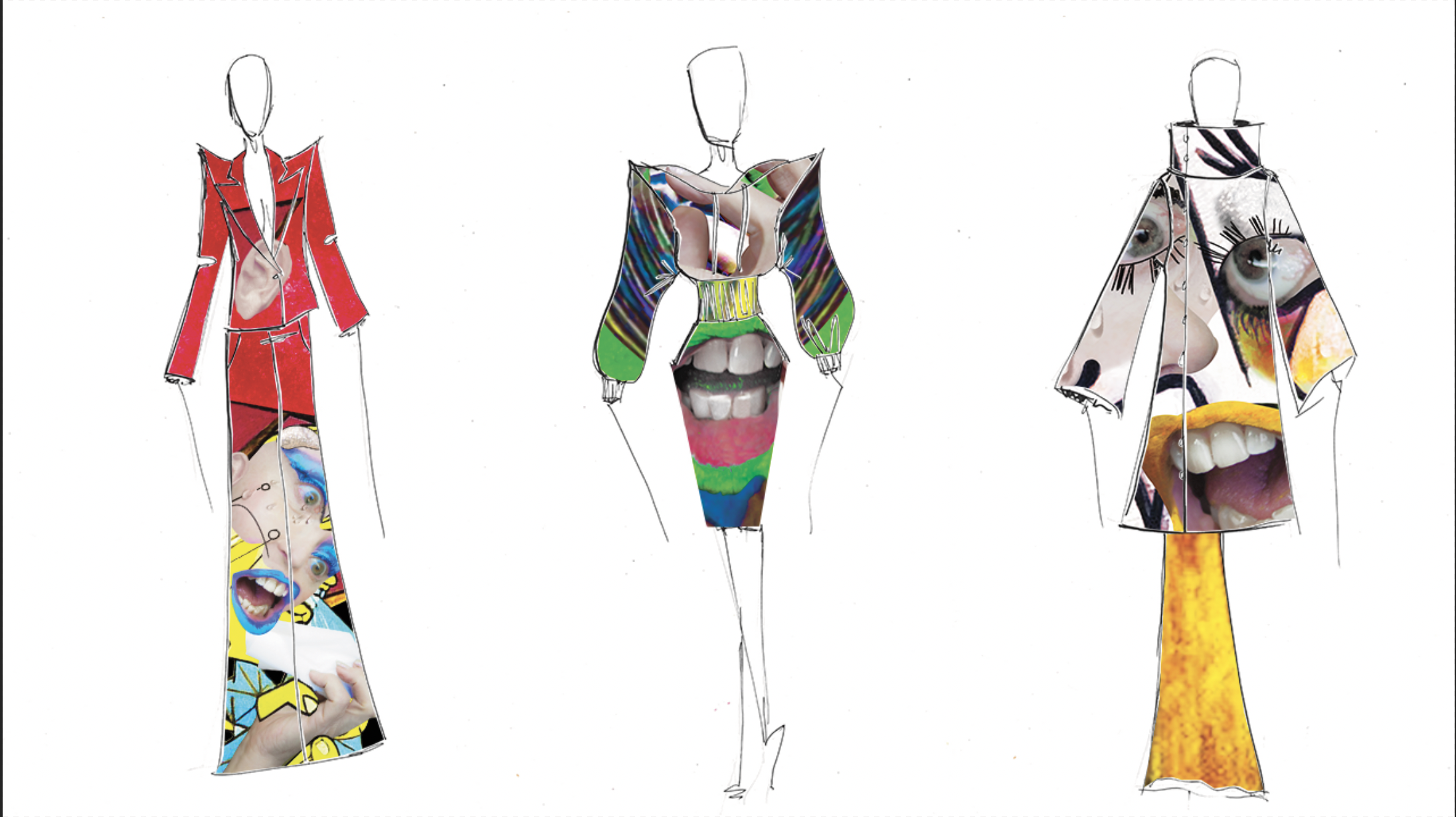
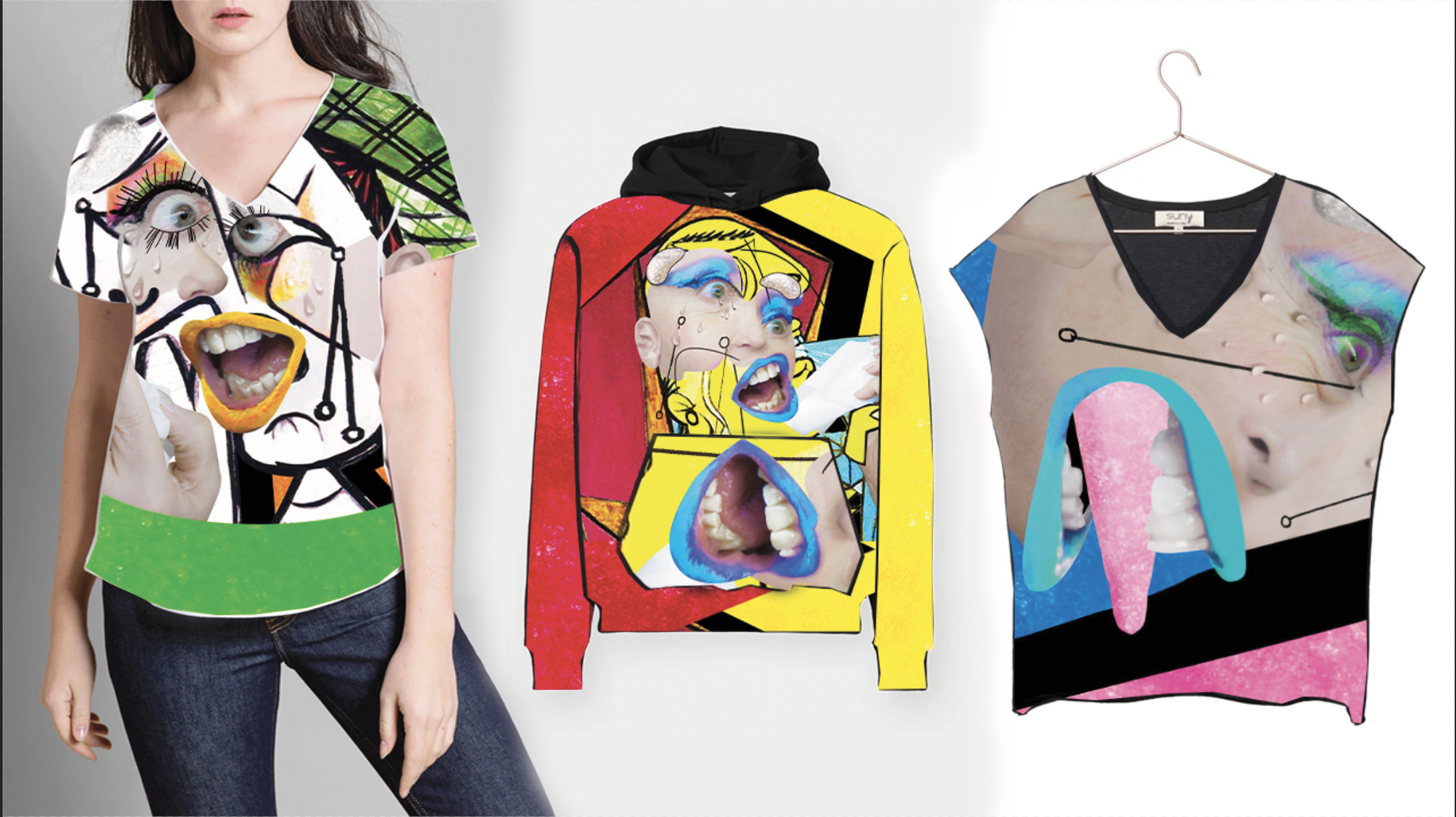
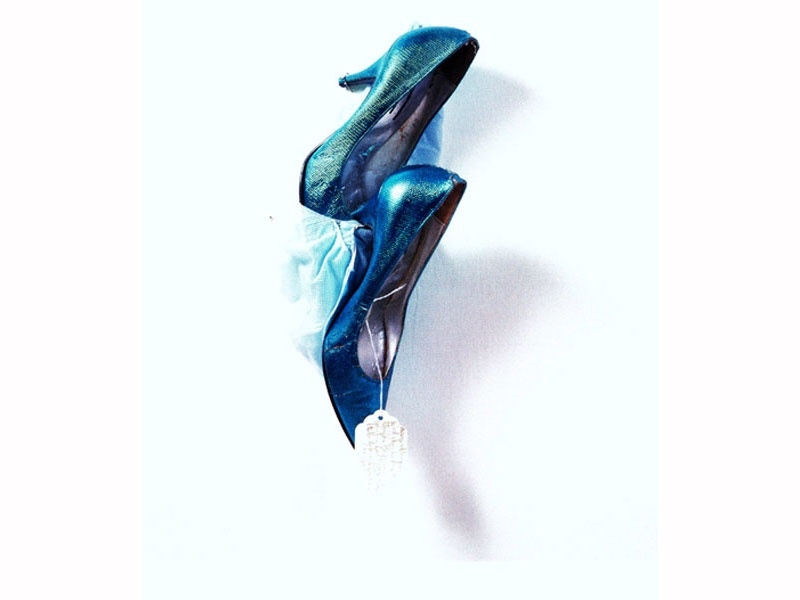
ORLAN has always had a conflictual relationship with fashion, which very often feeds the beauty stereotypes she fights against. Nevertheless, it’s a creative tool that ORLAN sometimes questions with the right concept and critical distance. In 2022, she created shoe prototypes with the group “Women Who Cry Are Angry.” And in 2025, ORLAN collaborated with Benat Moreno to design a capsule clothing collection.
ORLAN’S MASKS, 1984–2020
For ORLAN, the body is just a bag, the body is just a costume. She has worked extensively on the subject, and in particular on the mask in her work.
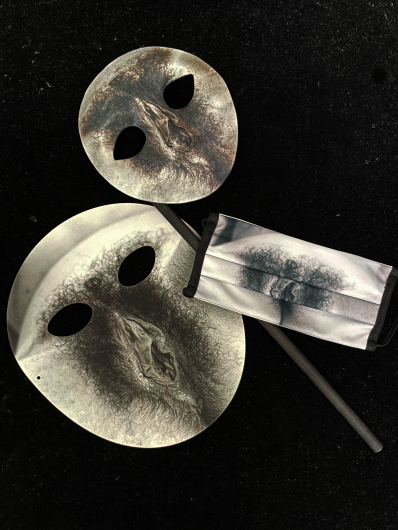
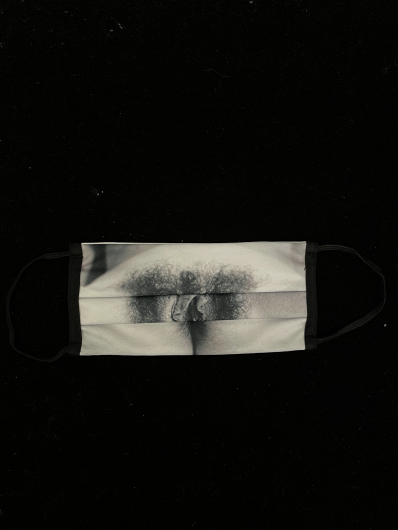
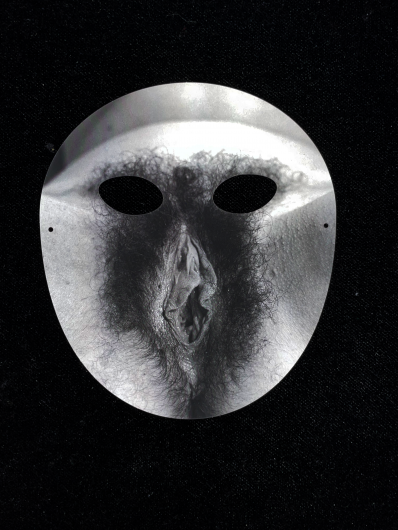
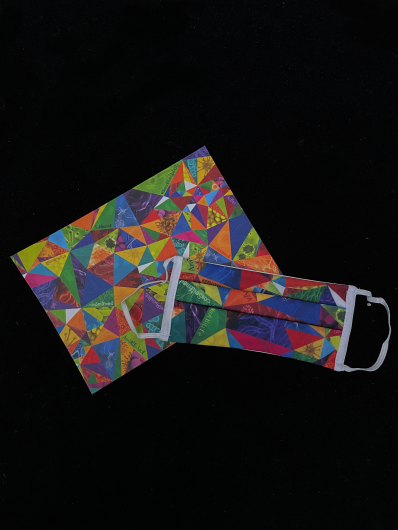
As early as 1964, in her CORPS-SCULPTURES series, she featured her naked body for the first time—most often without revealing her identity, as her hair, a mask, or her body’s position concealed her face. In 1984, ORLAN created a mask printed with a photograph of her vulva for her video performance, *Mise en scène pour un grand fiat*. She would go on to use this prop on numerous occasions, notably in her performance *Kiss on pussy*. In her first surgical performance, titled *Bloc du shérif* in 1986, she underwent surgery while wearing a mask at times. Of course, in her “self-hybridizations” with Peking Opera masks in 2014, ORLAN appropriated Chinese masks to reclaim her place as a woman in a setting where women are banned. Finally, with COVID21, ORLAN created several works centered on masks and the virus, designing wearable masks featuring a photograph of her vulva and a harlequin-like pattern on the inside of the body, incorporating bacteria, cells, and other elements.
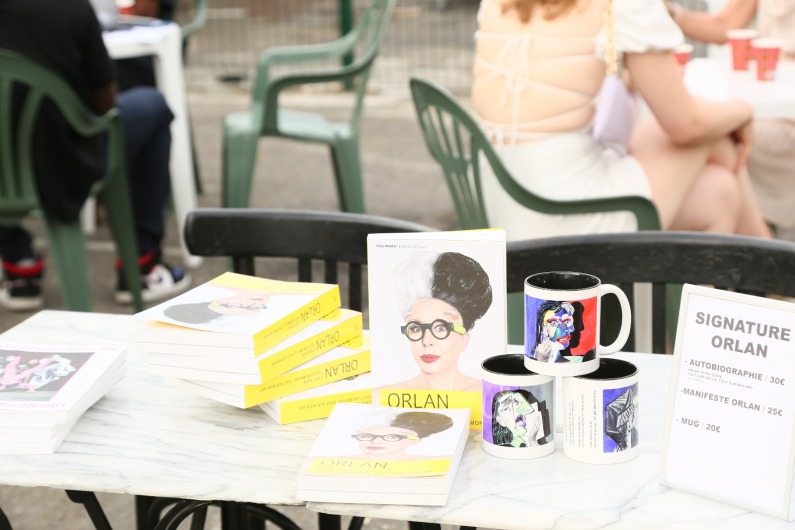
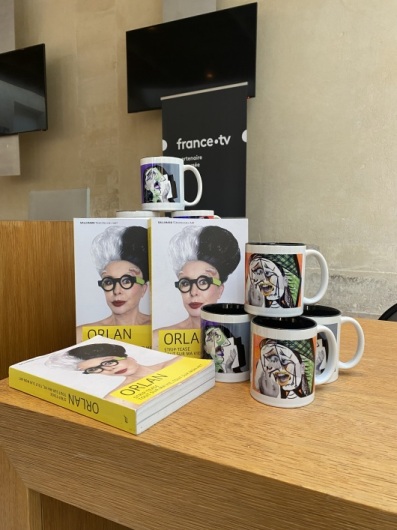
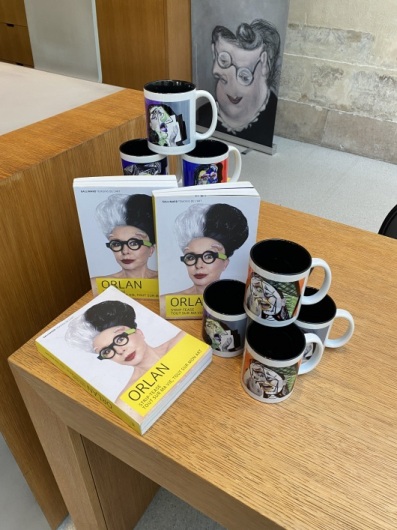
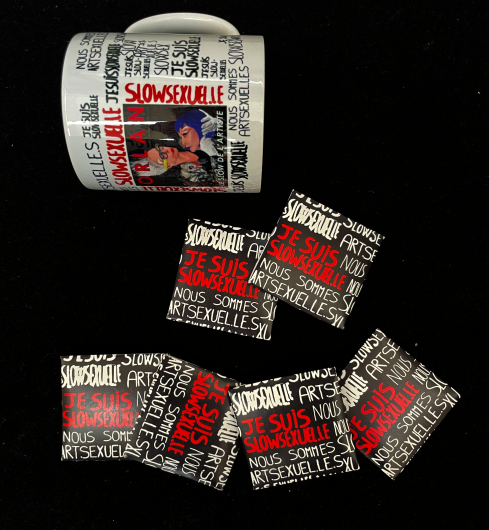
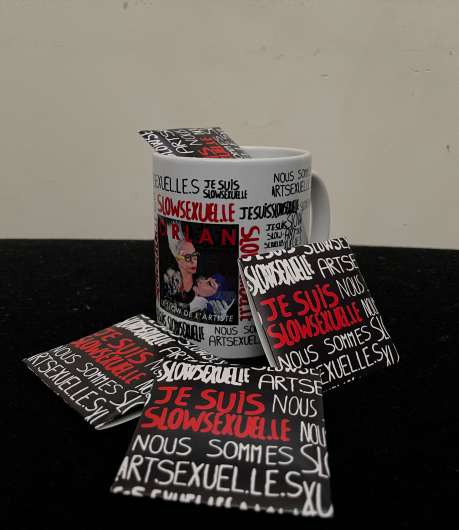
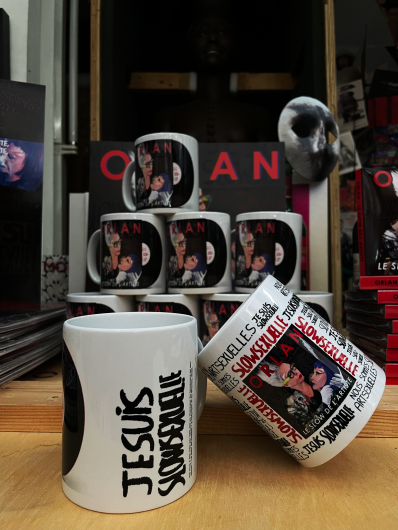
ORLAN has produced mugs as merchandising for her work on several occasions.
In 2014, she made her first mugs around her series on Le Plan du Film for her solo show at the Museum of Decorative Arts and Design in Riga, Latvia, European City of Culture, curated by Inese Baranovska.
In 2018, she is making mugs with each of the works from her Self-hybridations between women.
In 2023, she produced two new models to mark the launch of her album Le Slow de l’Artiste, as well as condoms.
New OMICS Buildings, Institut PASTEUR, artistic intervention, invitation as part of Fabrice Hyber’s ORGANOÏDELES PHAGES D’ORLAN”, 2018
Following her exhibition Le boeuf sur la langue (2010), ORLAN had the pleasure of being invited to take part in the ORGANOÏDE project created by her friend and academician Fabrice Hyber and Olivier Schwartz. This is a database of images created by artists to support Institut Pasteur’s scientific research.
As part of this project, she had the opportunity to collaborate with researcher Shahragim Tajbakhsh, head and expert of the Stem Cells and Development unit, which ORLAN is passionate about.
After discussing the matter at length with him, she wanted to work with her own stem cells, and she proposed a project along those lines to the Pasteur Institute, which was rejected by the ethics committee because it is illegal in France to work with one’s own cells. This just goes to show that the body and how it is used are political. Our bodies do not belong to us.
Finally, the Institut Pasteur, through Fabrice Hyber, invited him to work artistically in their new OMICS building, in the lobby of the Simone Veil and Alexandre Yersin buildings.
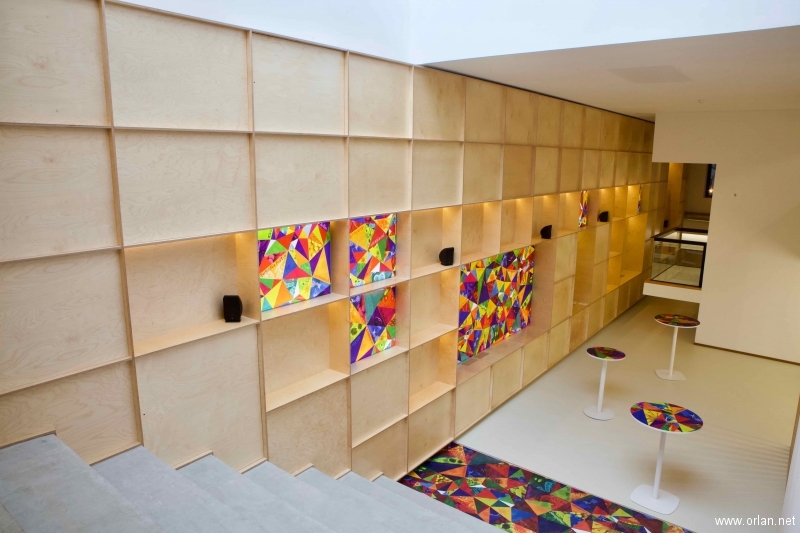
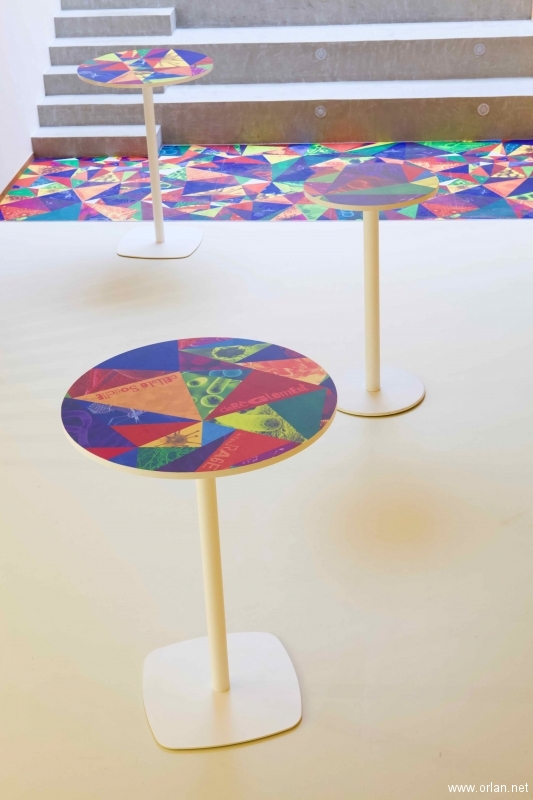
ORLAN has created a complete environment from colorful images of her cells and viruses, as in Le bœuf sur la langue, but in a different version. The words included in these colorful harlequinoid images were, for example, “rabies”, “pasteurella pestis”, “vaccine”, or “researcher”, a term that ORLAN greatly appreciates as it underlines the feminization of professional names, whereas Marie Curie, as a woman, suffered greatly from being a researcher among researchers.
The images were installed in light boxes and on a floor covering, on and under bleachers and on high round tables covered with this print. The final touch is a very large tondo, installed at the top of the white wall opposite the bleachers.
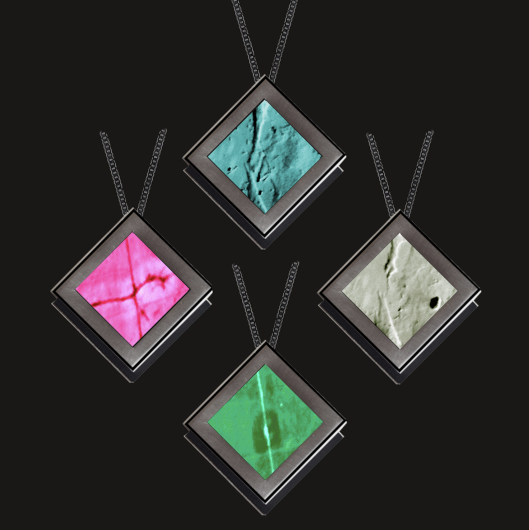
ORLAN X NUBI, From Drapery to Digital Folds, 2016 Animated digital brooch; OLED screen, stainless steel, and black glass paste; 3.8 cm x 3.8 cm x 1.6 cm; Limited edition of 12 pieces / CELLULES, 2016 Animated digital long necklace; OLED screen, stainless steel, and black glass paste; 3.8 cm x 3.8 cm x 1.6 cm; Limited edition of 222 pieces
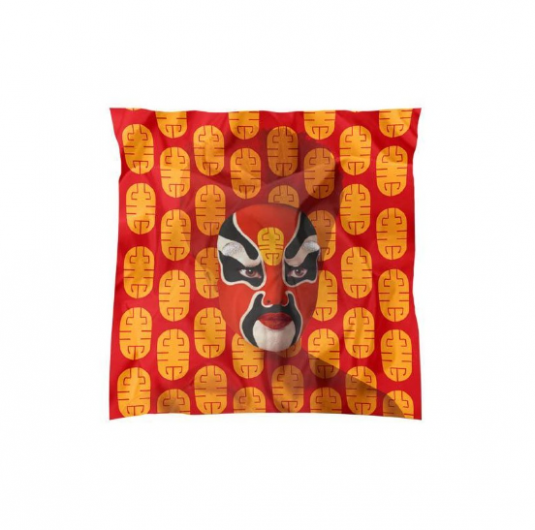
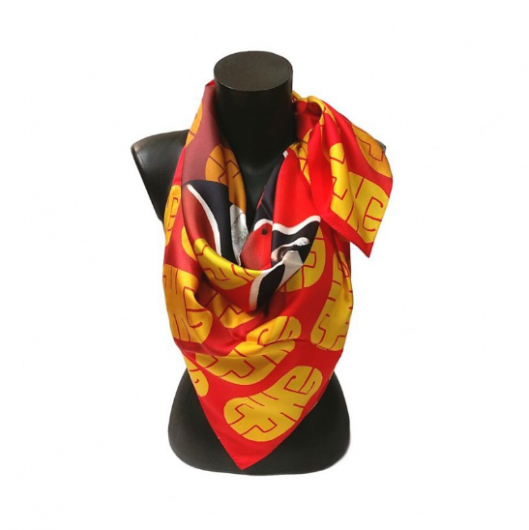
ORLAN x Brochier Soieries, Carrée de soie, Self-hybridisations Masques de l’Opéra de Pékin, Facing Designs and augmented reality n°12016, 90×90 cm
ORLAN and Brochier silks collaborated to create silk scarves based on her series of Self-hybridations of Peking Opera masks, 2014. In this opera, women are outlawed and men play their roles.
Like the artworks, the scarf serves as a QR code. The customer can scan it to see an avatar of ORLAN appear, stepping out of the artwork’s frame and performing acrobatic moves from the Peking Opera.
You can then take photos of yourself, your friends and your avatar, and send them around the world just like any other selfie.
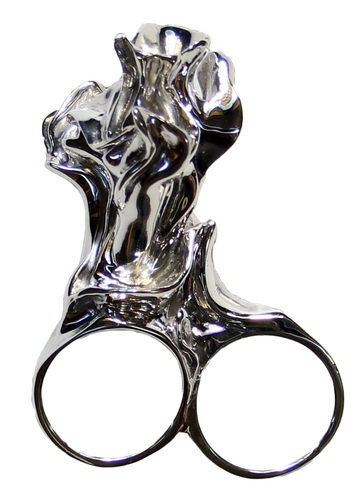
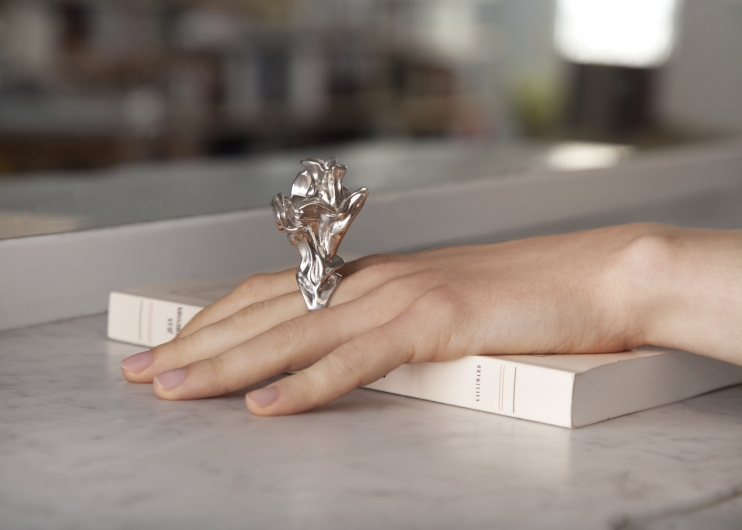
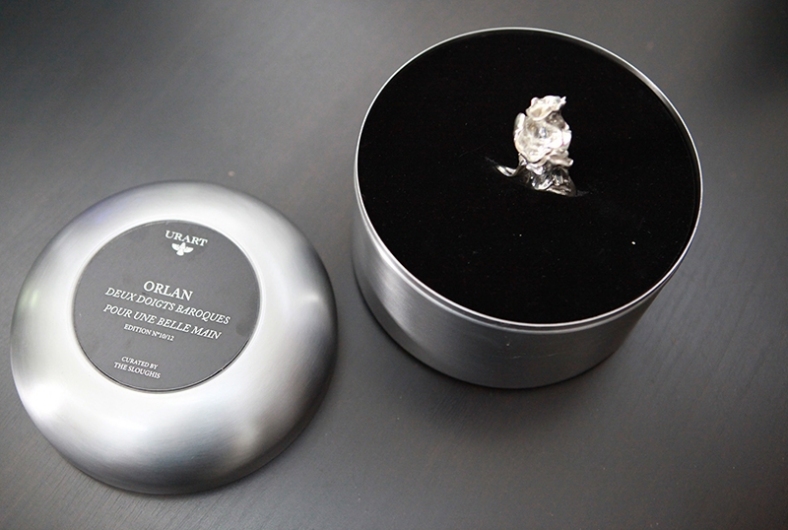
TWO BAROQUE FINGERS FOR A BEAUTIFUL HAND, Sterling silver ring, 4.3 x 6 x 3.2 cm, Edition of 12, 2015
In 2015, ORLAN created *TWO BAROQUE FINGERS FOR A BEAUTIFUL HAND*, a solid silver ring that builds on her work with baroque drapery. She creates volume using organic shapes, curves, and counter-curves…
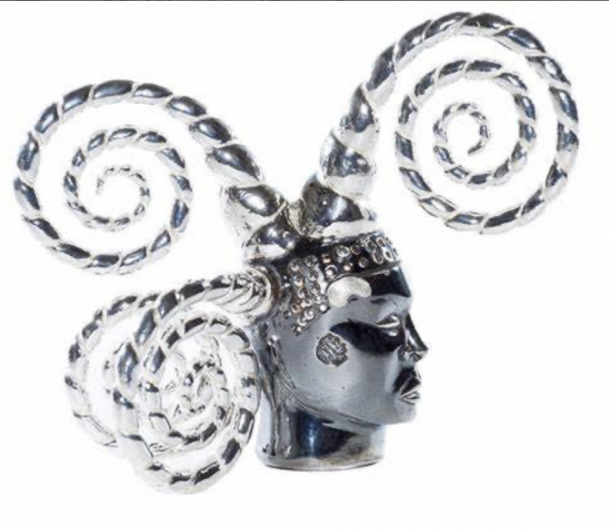
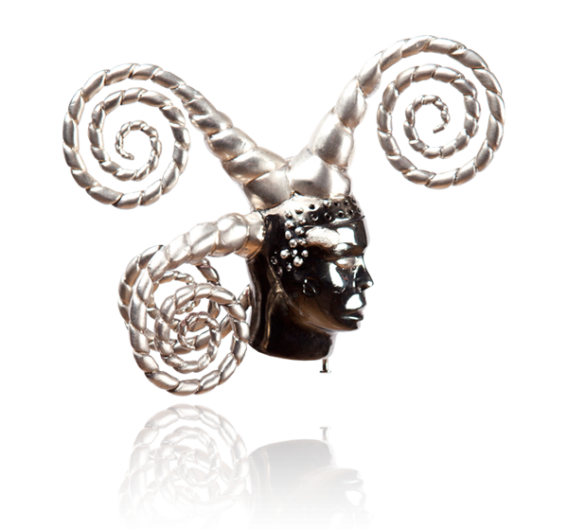
ORLAN x Diane Venet, Tête de fou, 2010, gold and silver, 8.5 x 10.5 x 3 cm
Brooch inspired by the artwork Disfiguration-Refiguration, African Self-Hybridizations, Ancient Ejagham dance headdress from Nigeria, and the face of a woman from Saint-Étienne, France
This series consists of a series of black and white photographs based on ethnographic photography, the first photos in which the Other is photographed. In 2010, ORLAN collaborates with Diane Venet. These are the gold and silver Tête de fou brooches created from the work Défiguration-Refuguration, Self-hybridations Africaines, Cimier ancien de danse Ejagham Nigéria and visage de femme euro-stéphanoise.
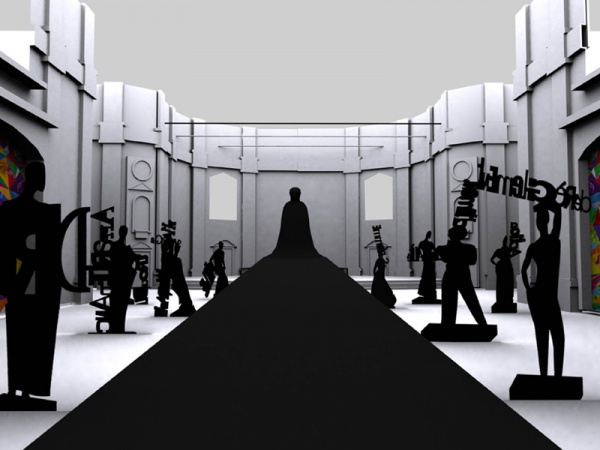
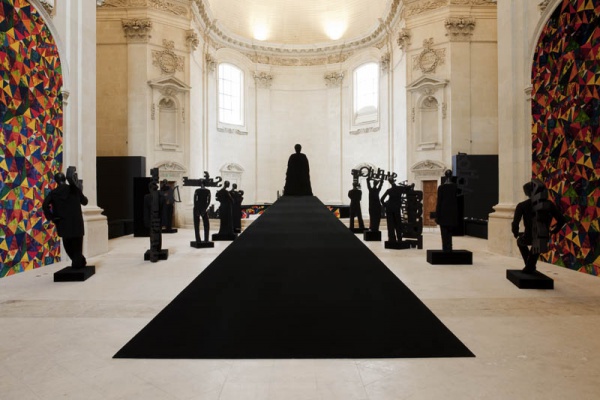
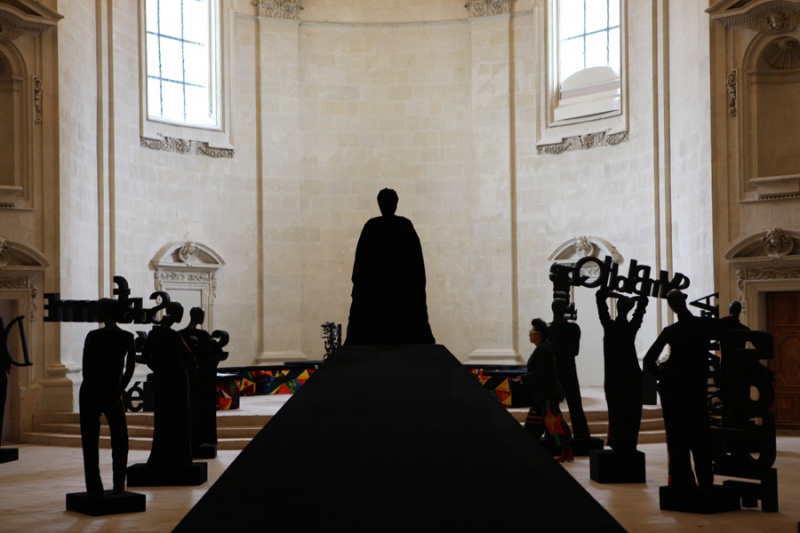
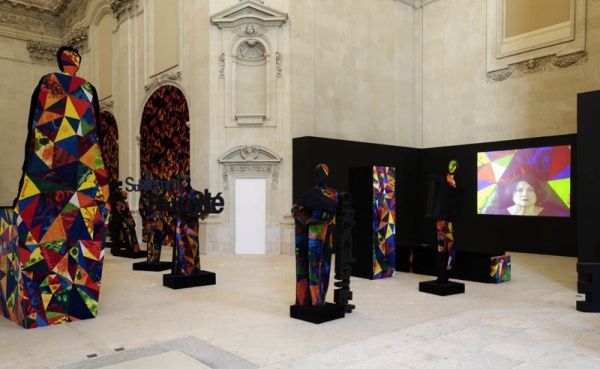
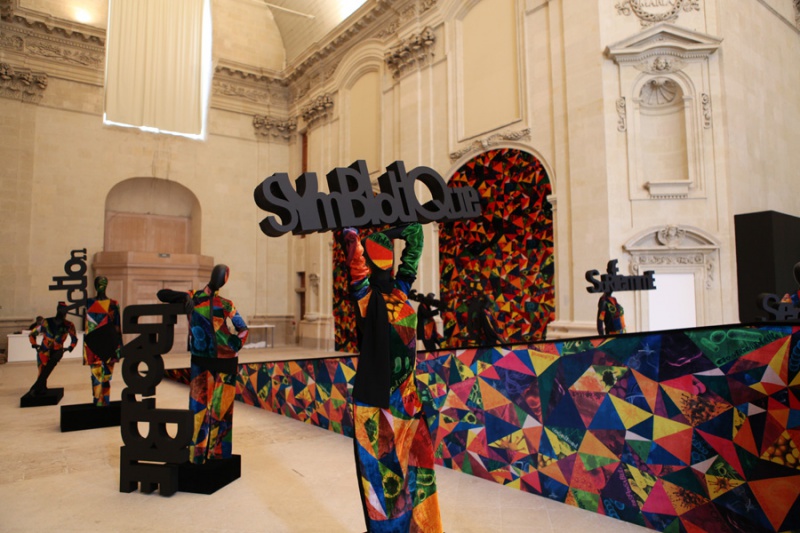
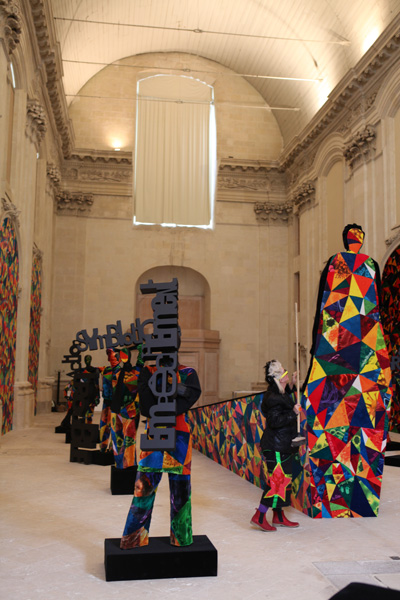
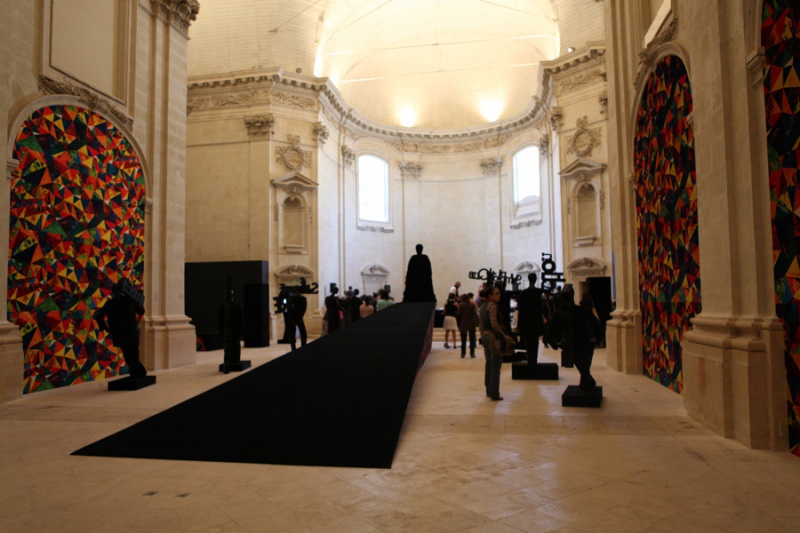
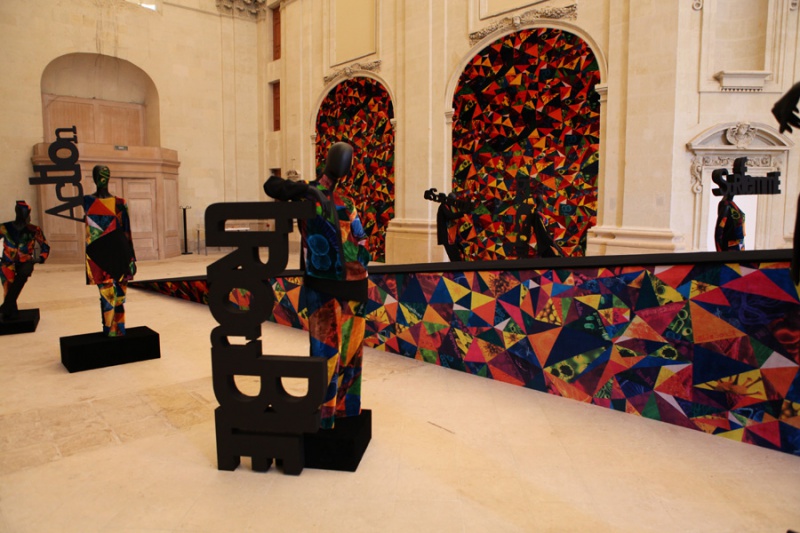
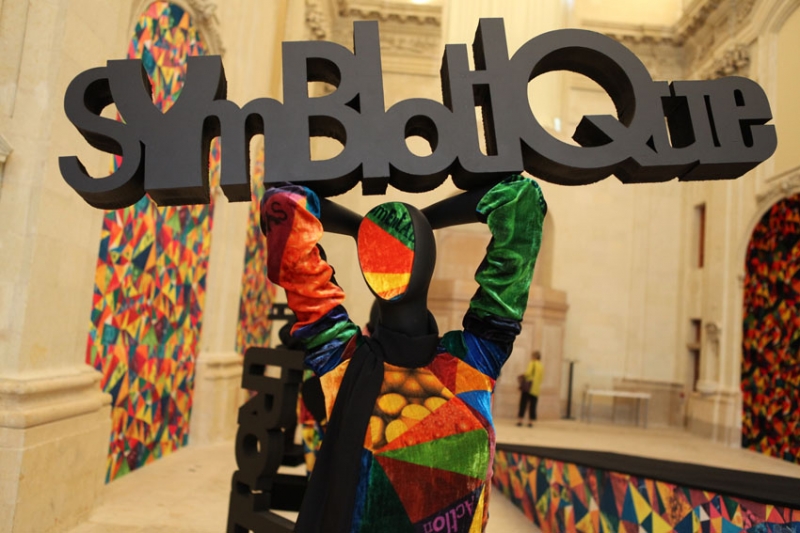
*Un Boeuf Sur La Langue*, Nantes Museum of Fine Arts, Chapelle de l’Oratoire, France, 2010
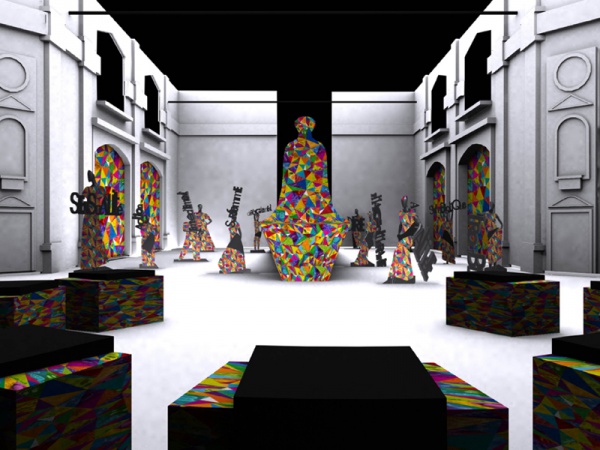
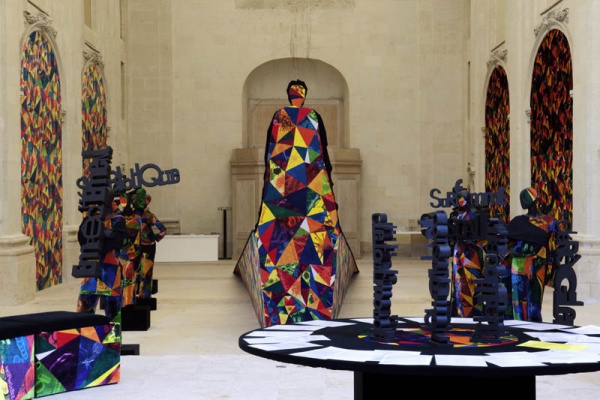
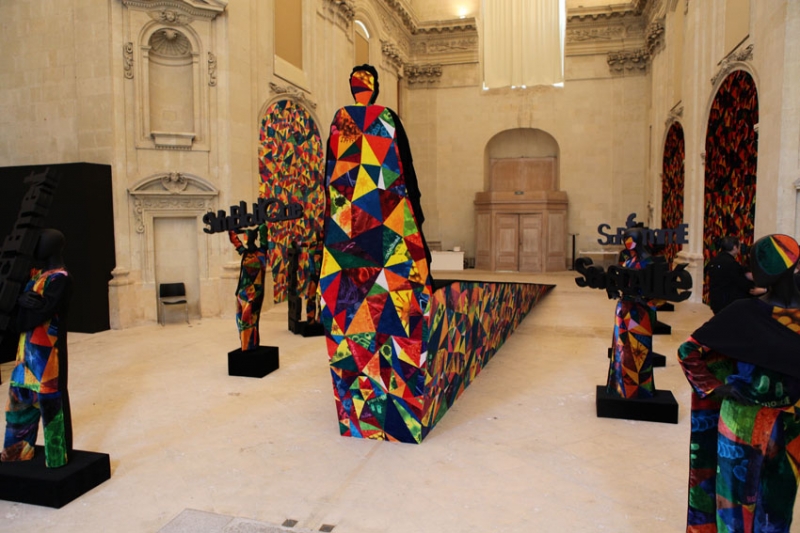
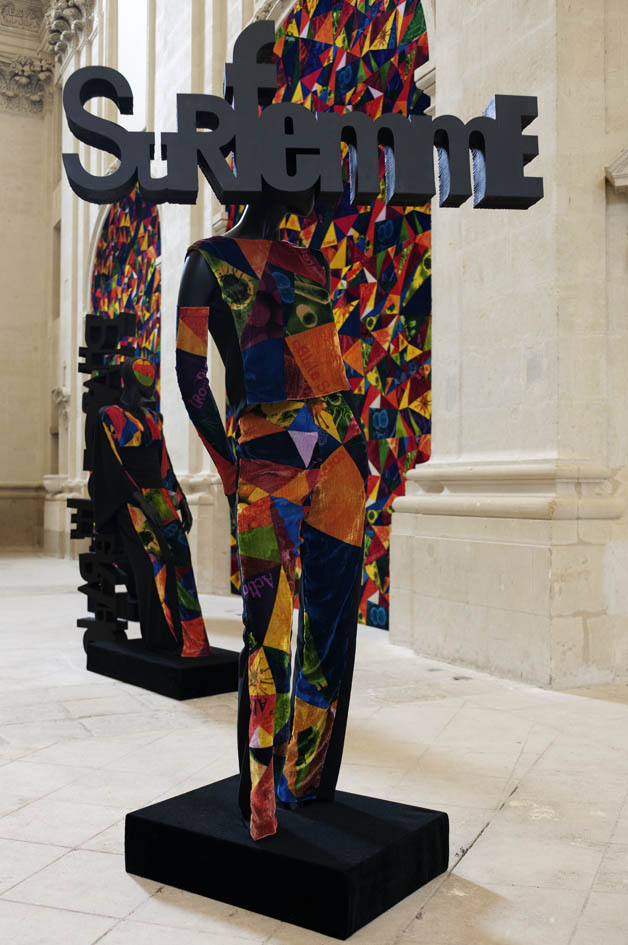
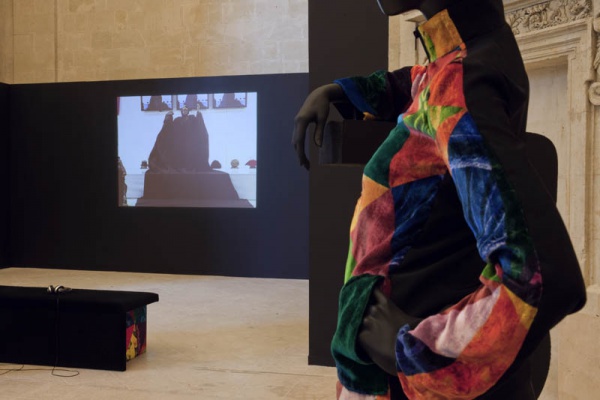
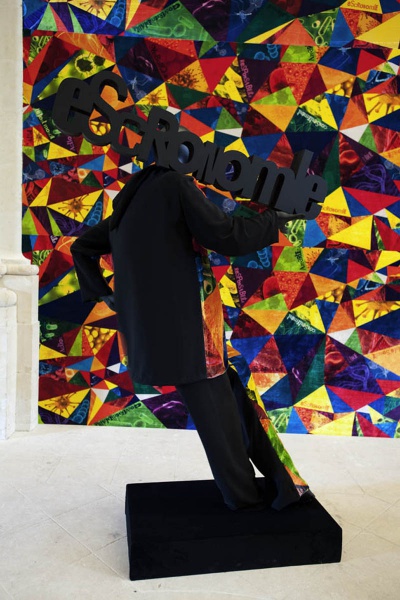
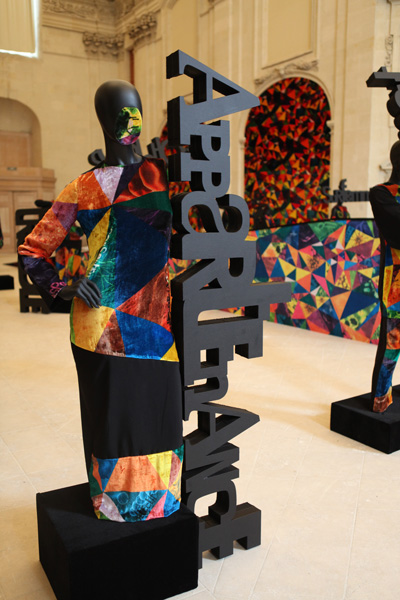
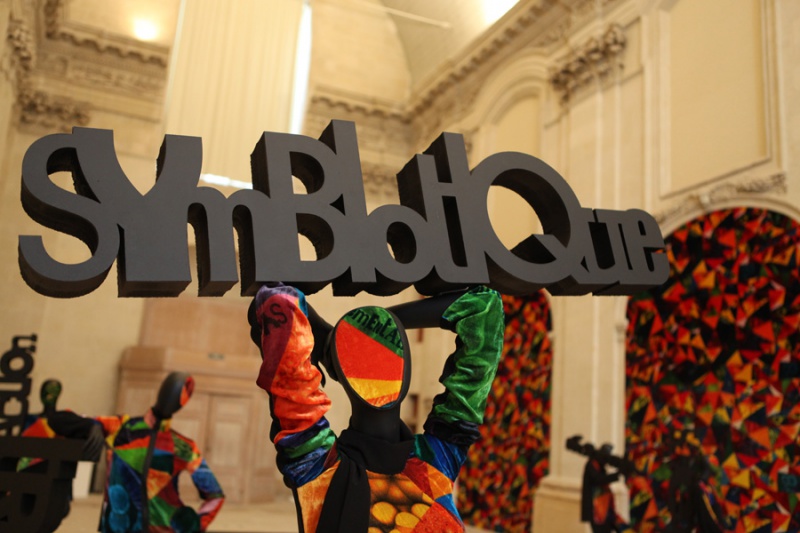
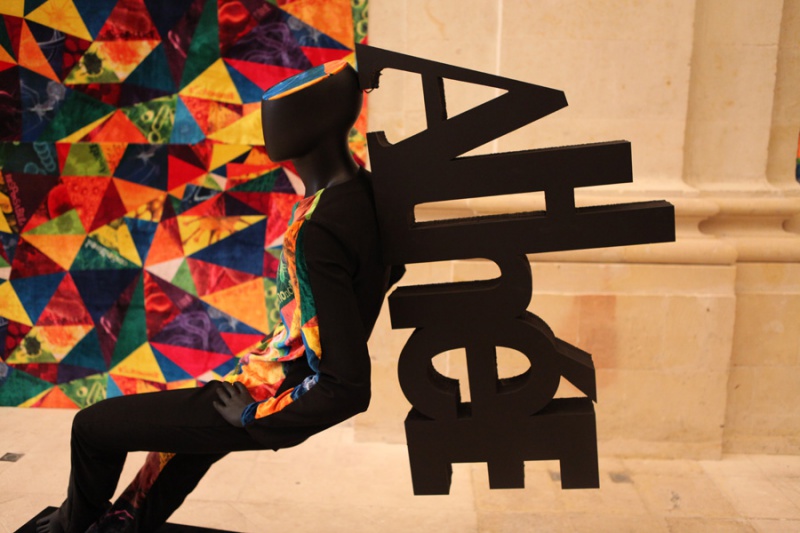
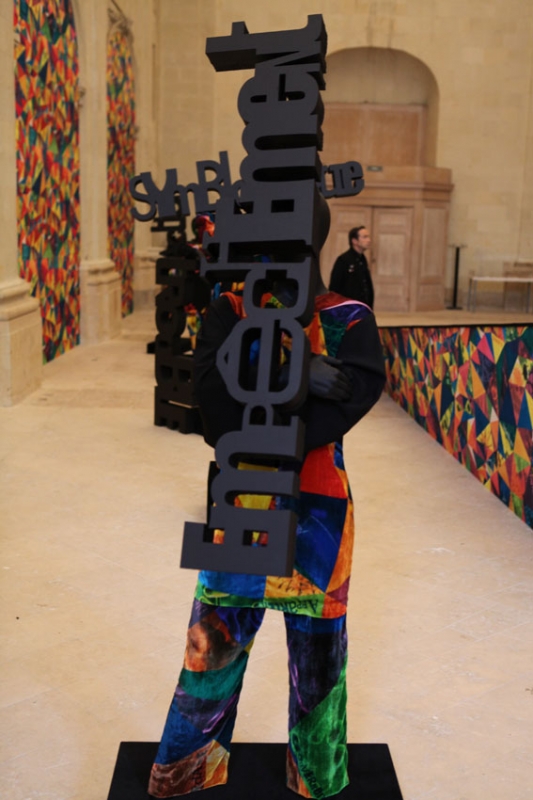
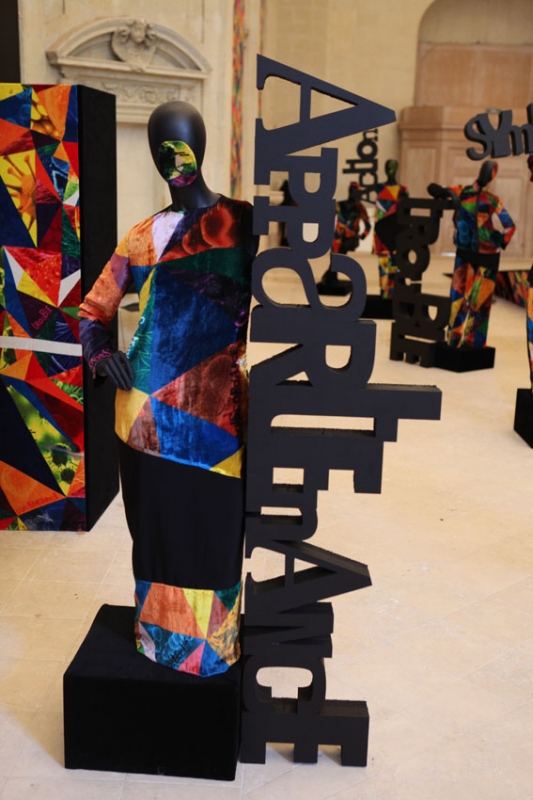
In 2010, ORLAN curated the exhibition *Un boeuf sur la langue*, for which she created a silk velvet printed by the Brochier silk mill with a design featuring viruses, phages, blood, skin, and muscle cells—almost solely for the pleasure of touching and seeing this highly vibrant, highly pictorial material, which she used to create chairs, dresses, artworks, and spaces imitating stained-glass windows.
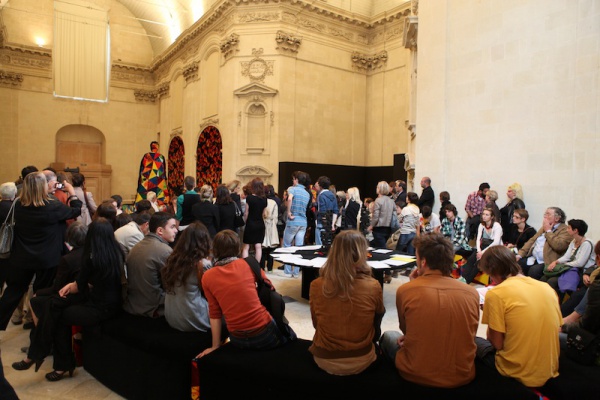
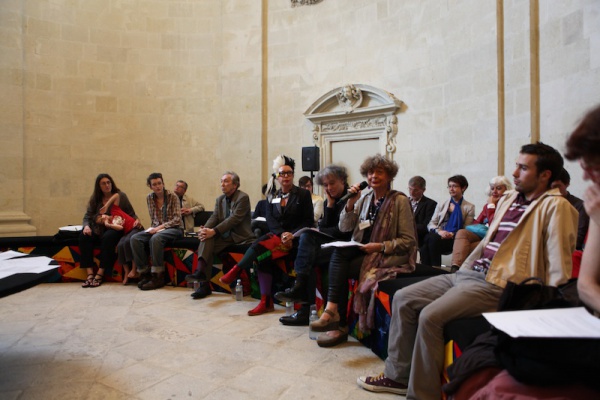
These dresses were worn by black models and were black on the back, but very colorful on the front. The furniture included a table with a revolving top and a very large semi-circular bench made up of interlocking stools on castors, on which the public sat during the many discussions organized during the exhibition about the words featured in the space. Participants could either stay in the conversation collectively, or roll up their seats and detach themselves from the group, and the conversation became individual again.
The concept of the exhibition was to blend design, fashion, art, sculpture, texts and medical imagery in a single venue, the Musée des Beaux-Arts in Nantes.
When we entered the installation, everything was black and we couldn’t understand what the mannequins were holding. The atmosphere was heavy, inquisitive, almost morbid. Moving into the oratory chapel, little by little it was possible to read texts like “dire”, “athée”, “sur-femme”, “symbiotique”… And, at the same time, see the front of the garments made from this very colorful silk velvet, like a harlequinade.
Suture-Hybridization-Recycling, Espacio Artes Visuales, Murcia, Spain, 2009
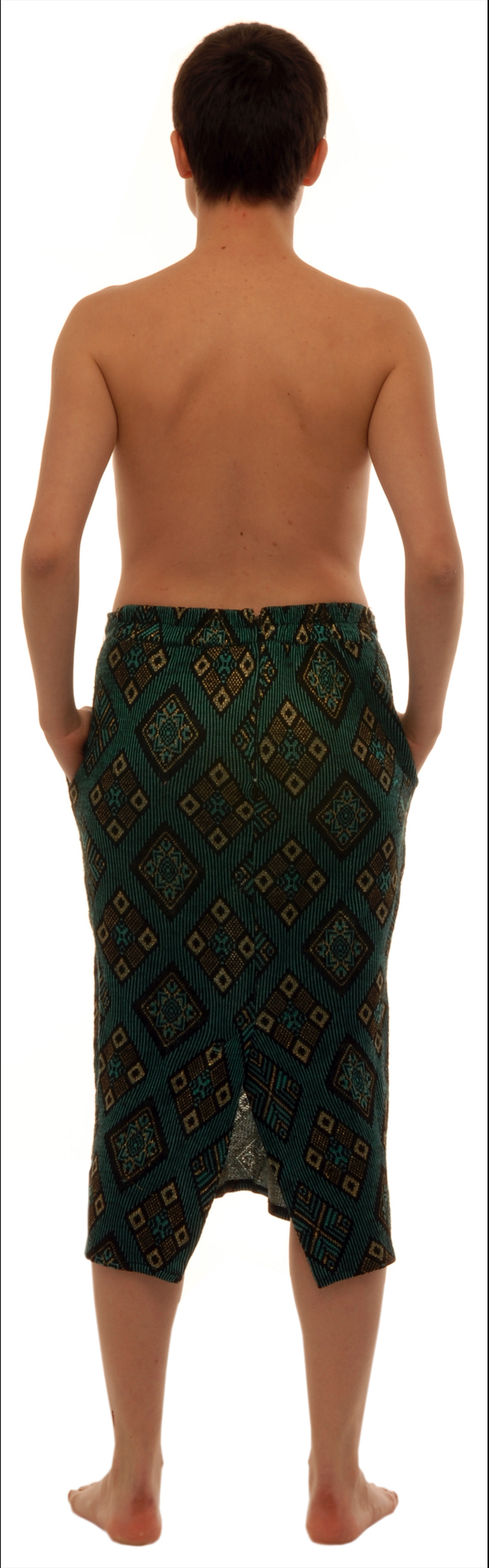
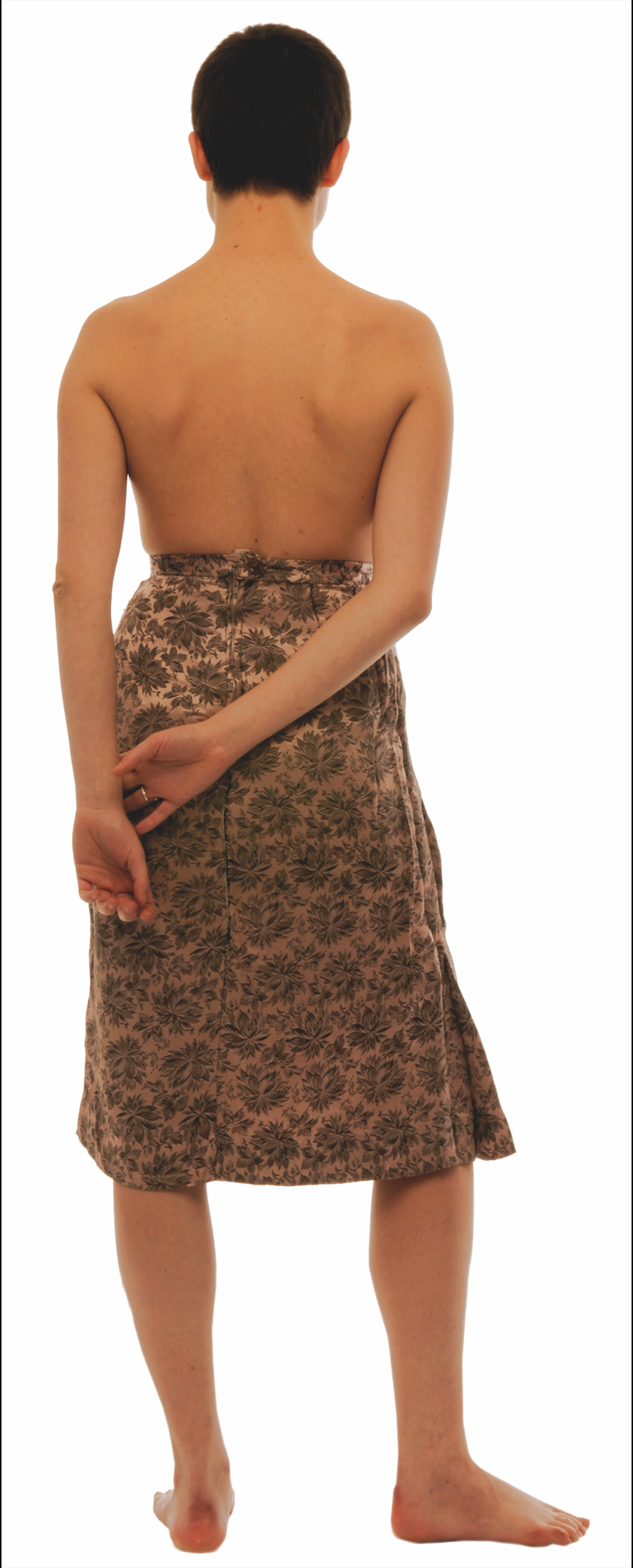
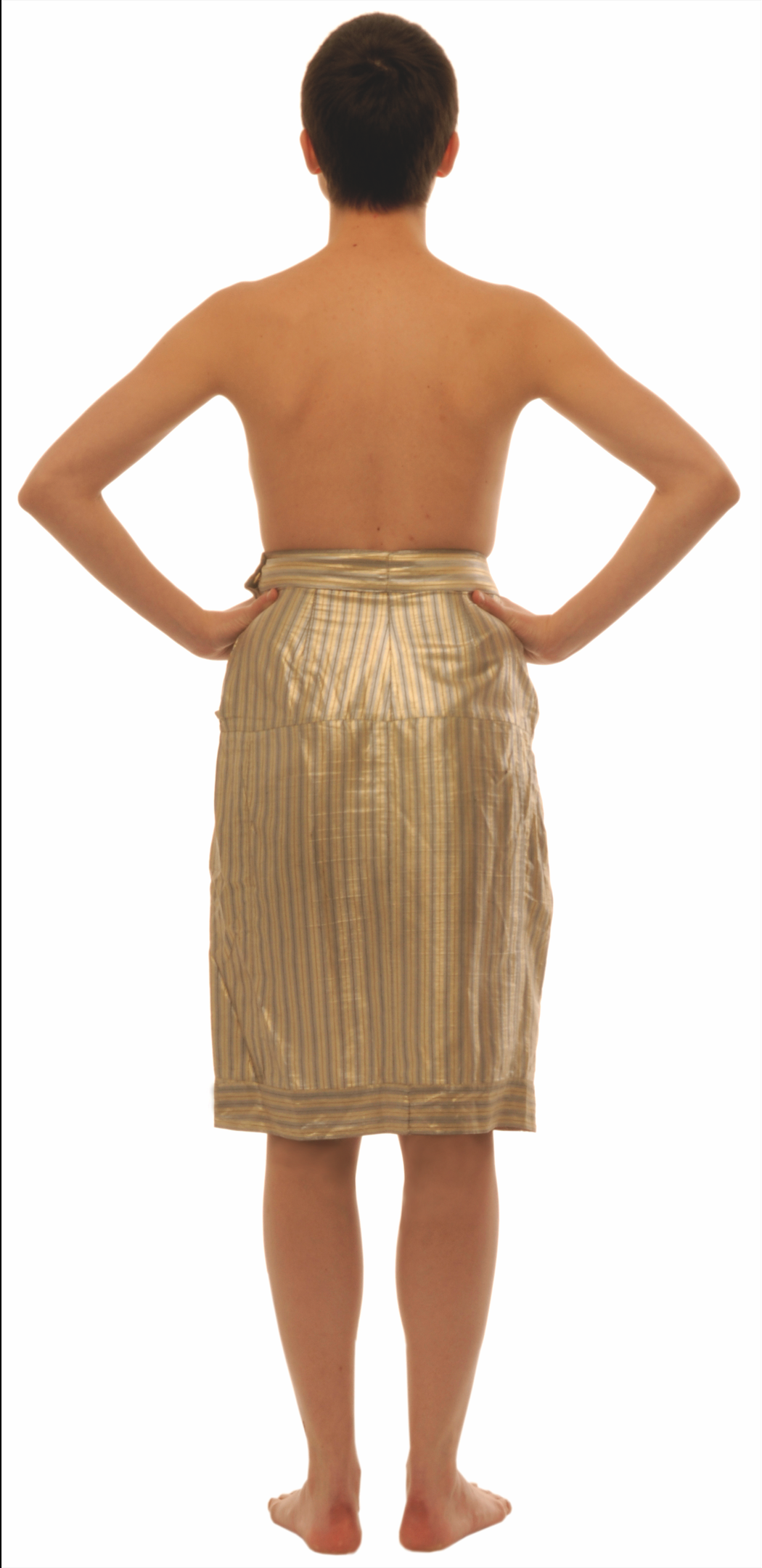
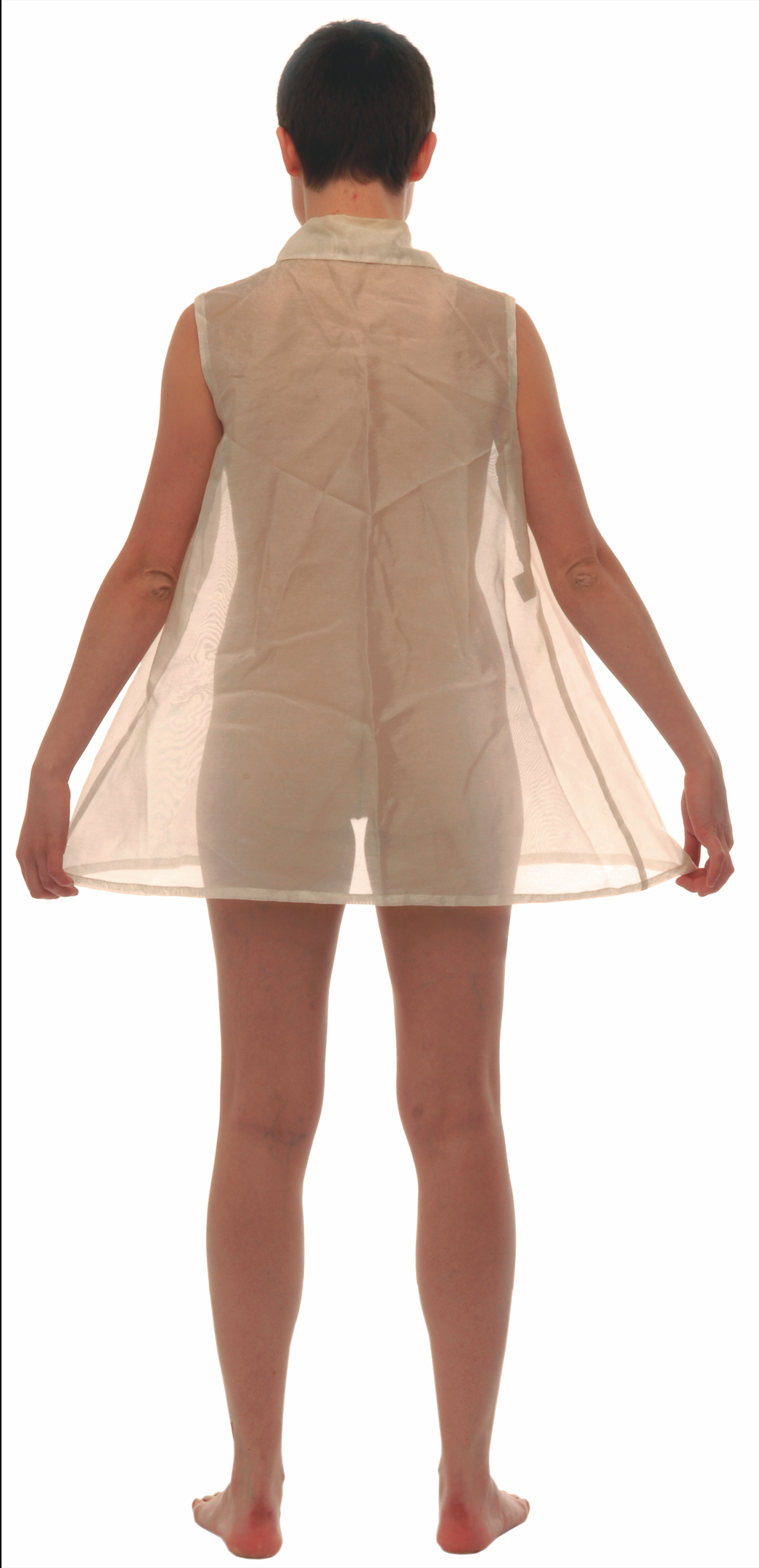
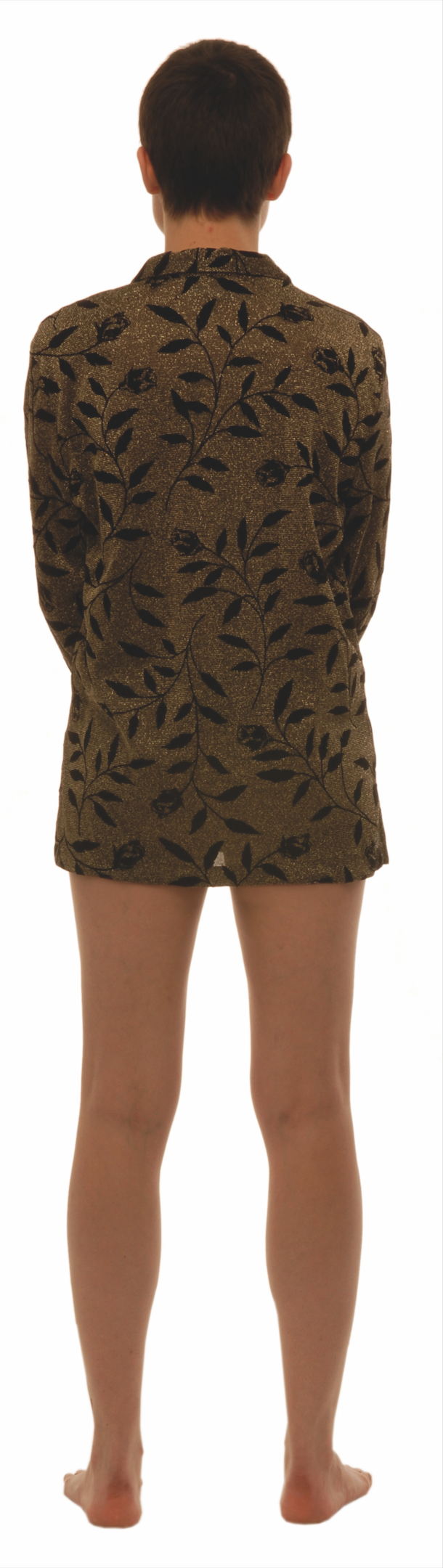
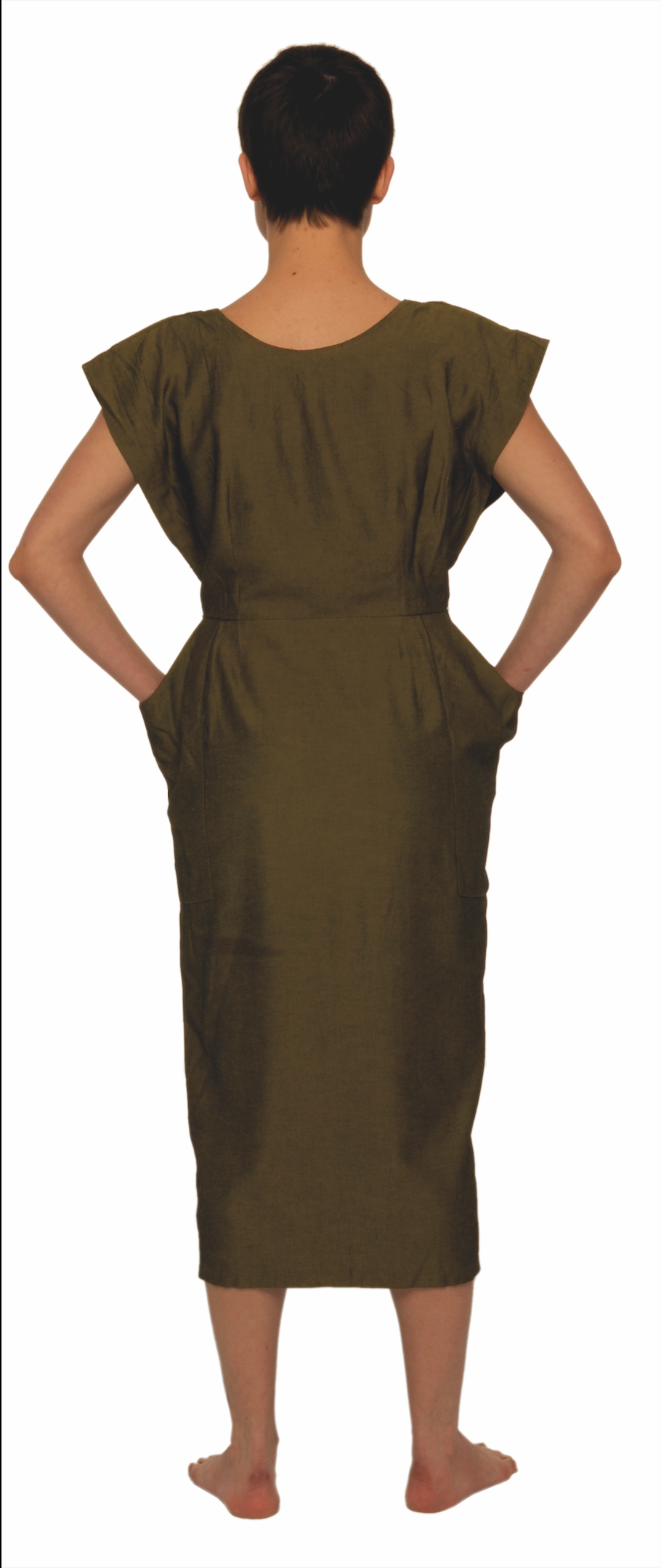
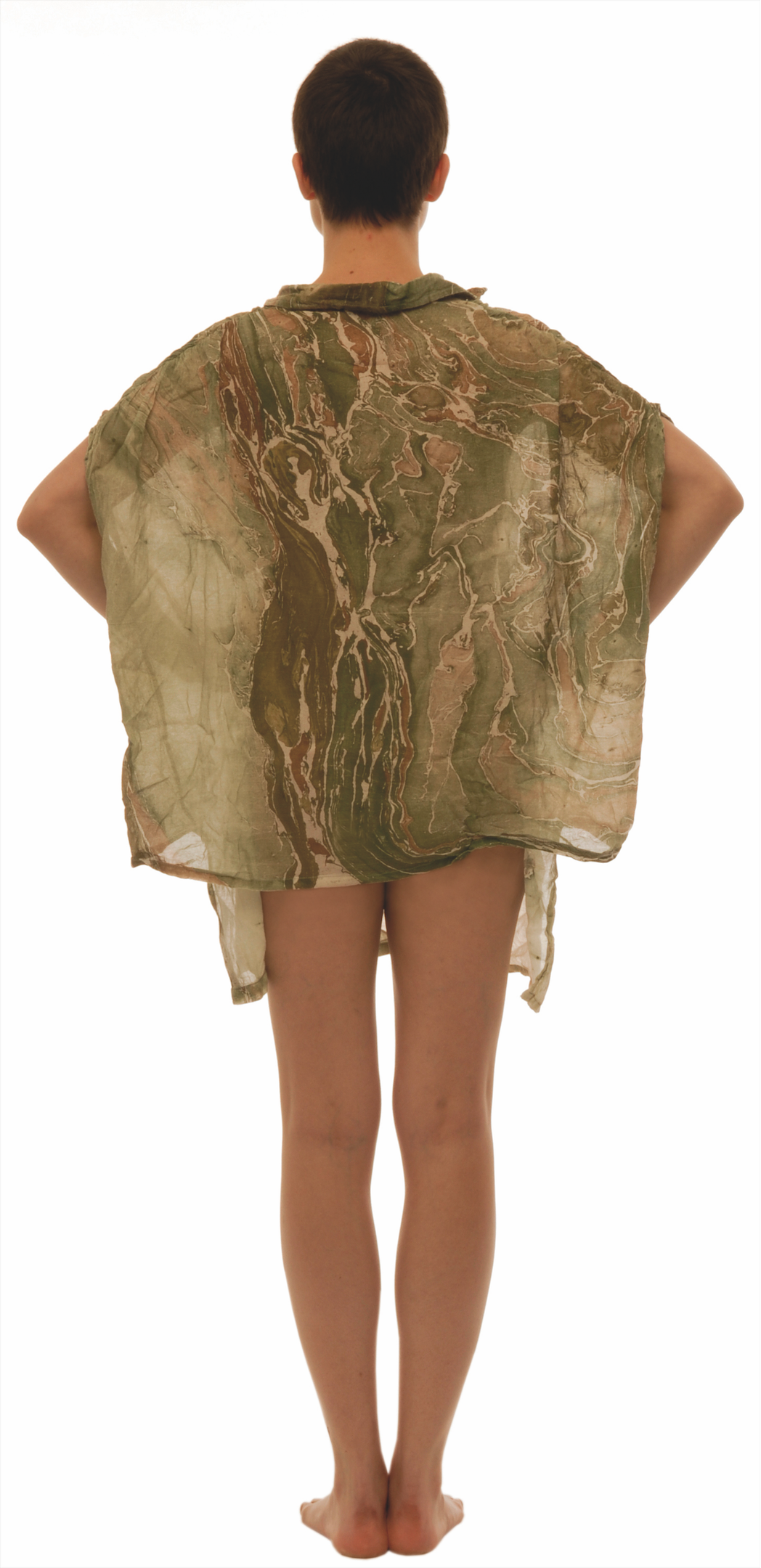
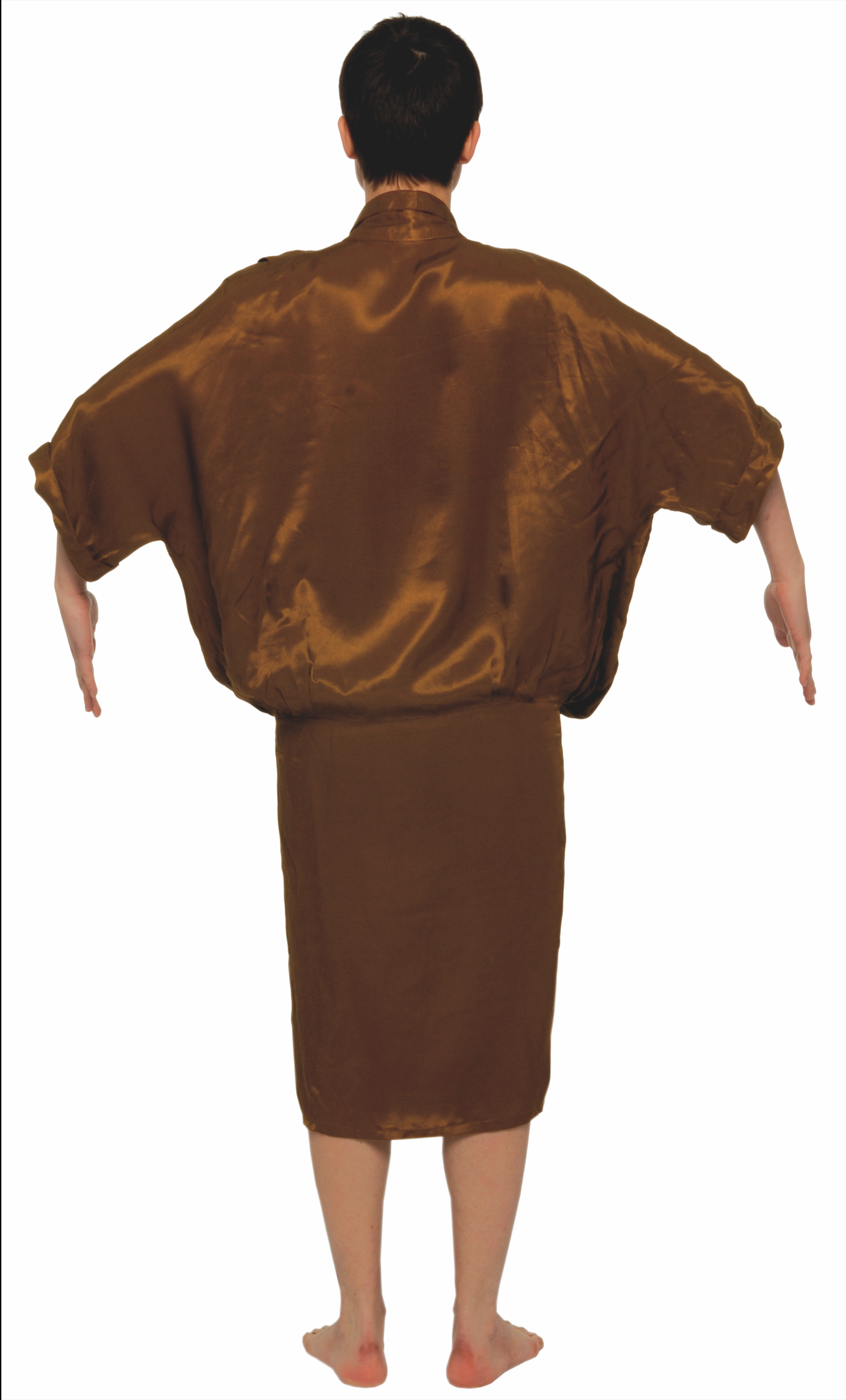
Virtually all of ORLAN’s work can be read through the prism of dress, costume and cross-dressing. For the artist, clothing is a better interface than skin. You can’t choose your skin, but thanks to clothing, you can create a second skin, a calling card as close as possible to who you are, to the image you want to produce, to your culture, to your tastes, to build your calling card and who you want to be.
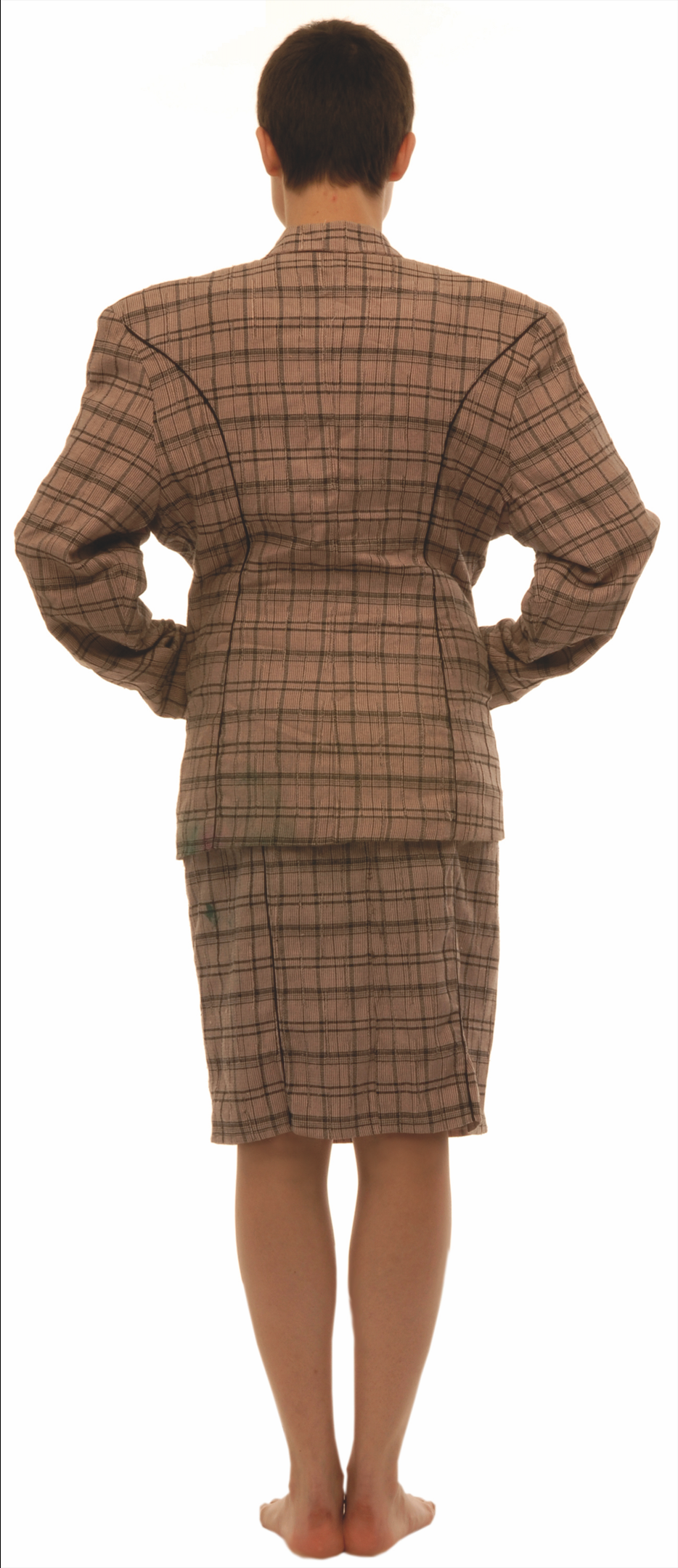
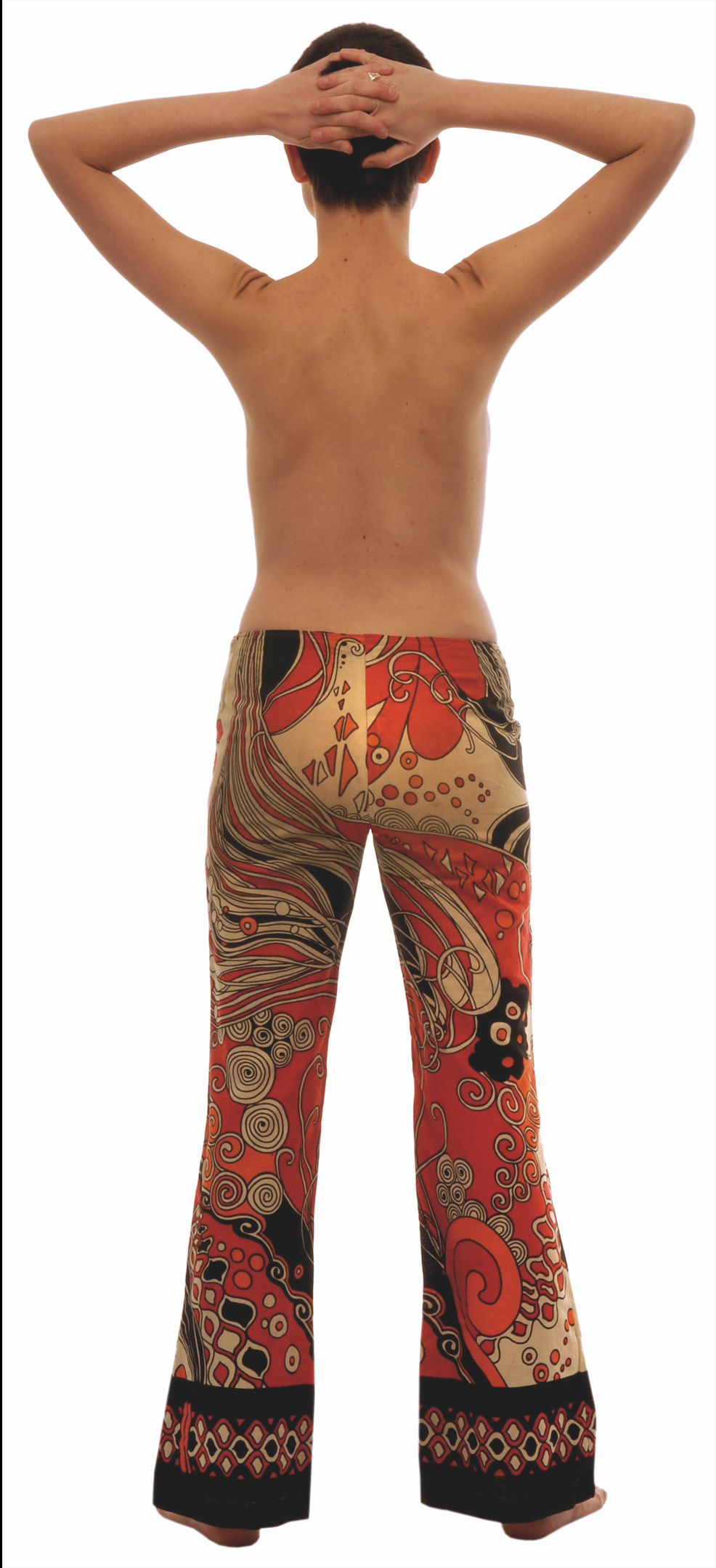
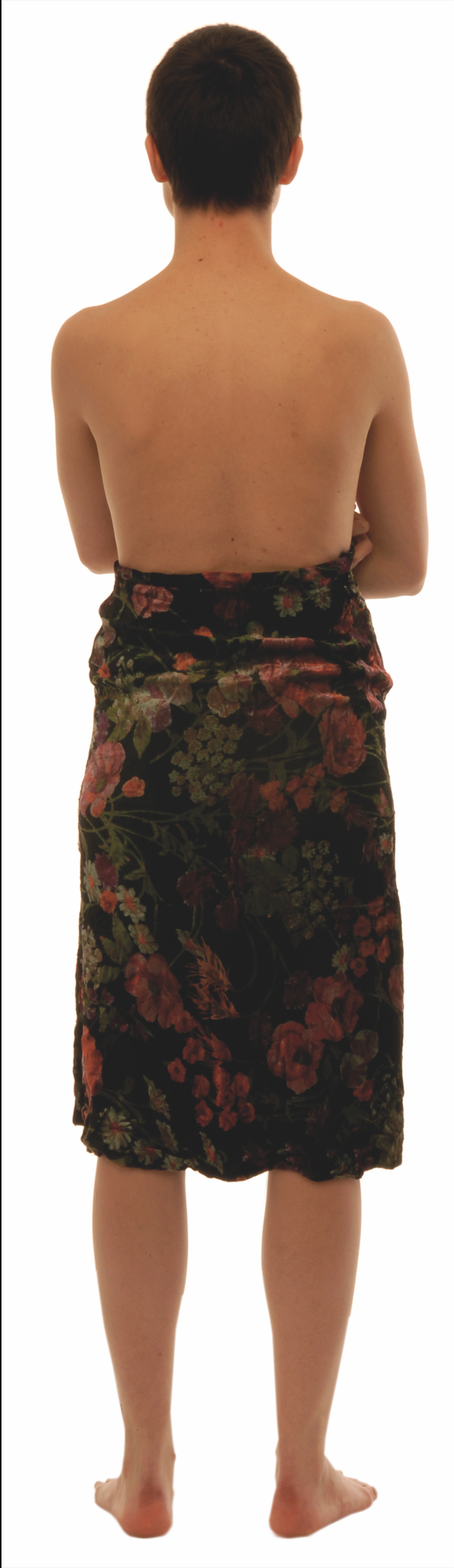
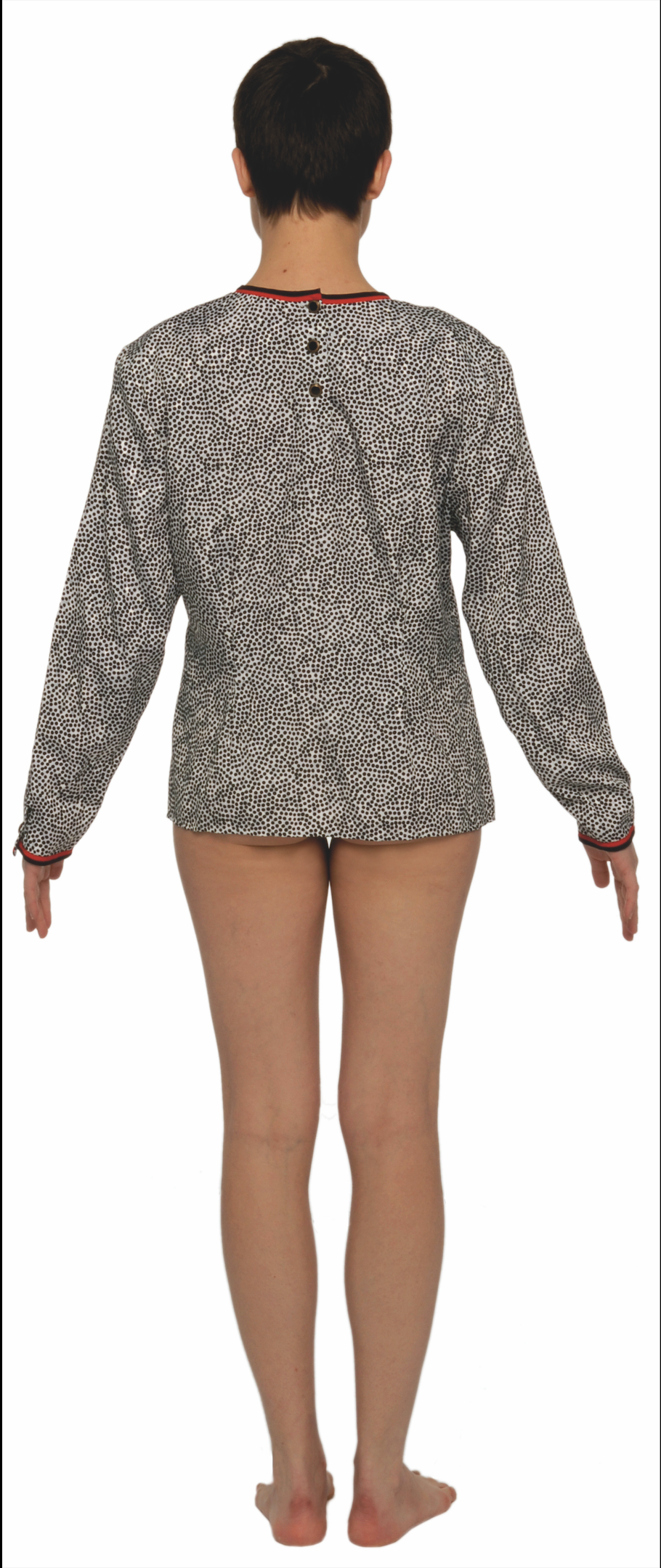
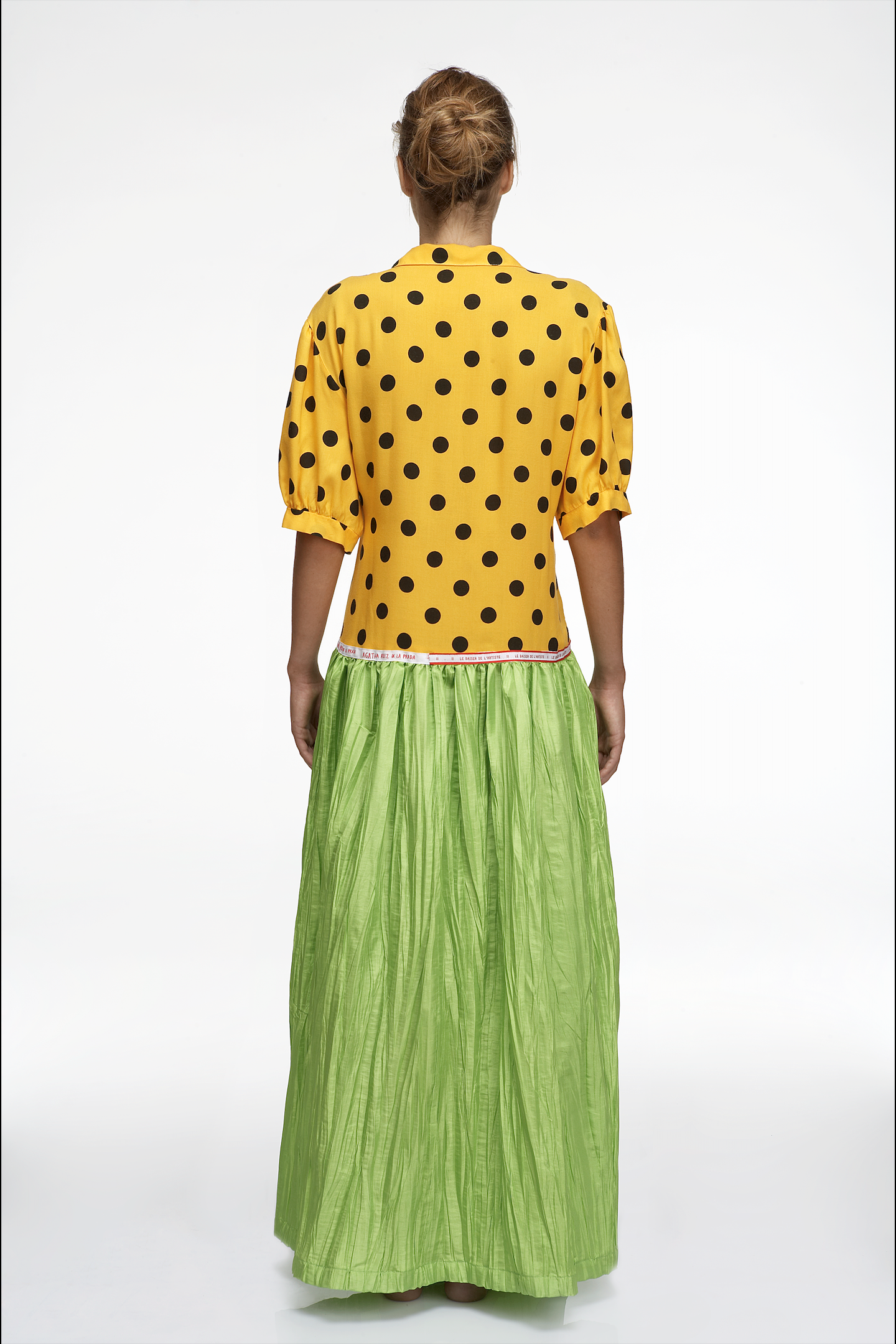
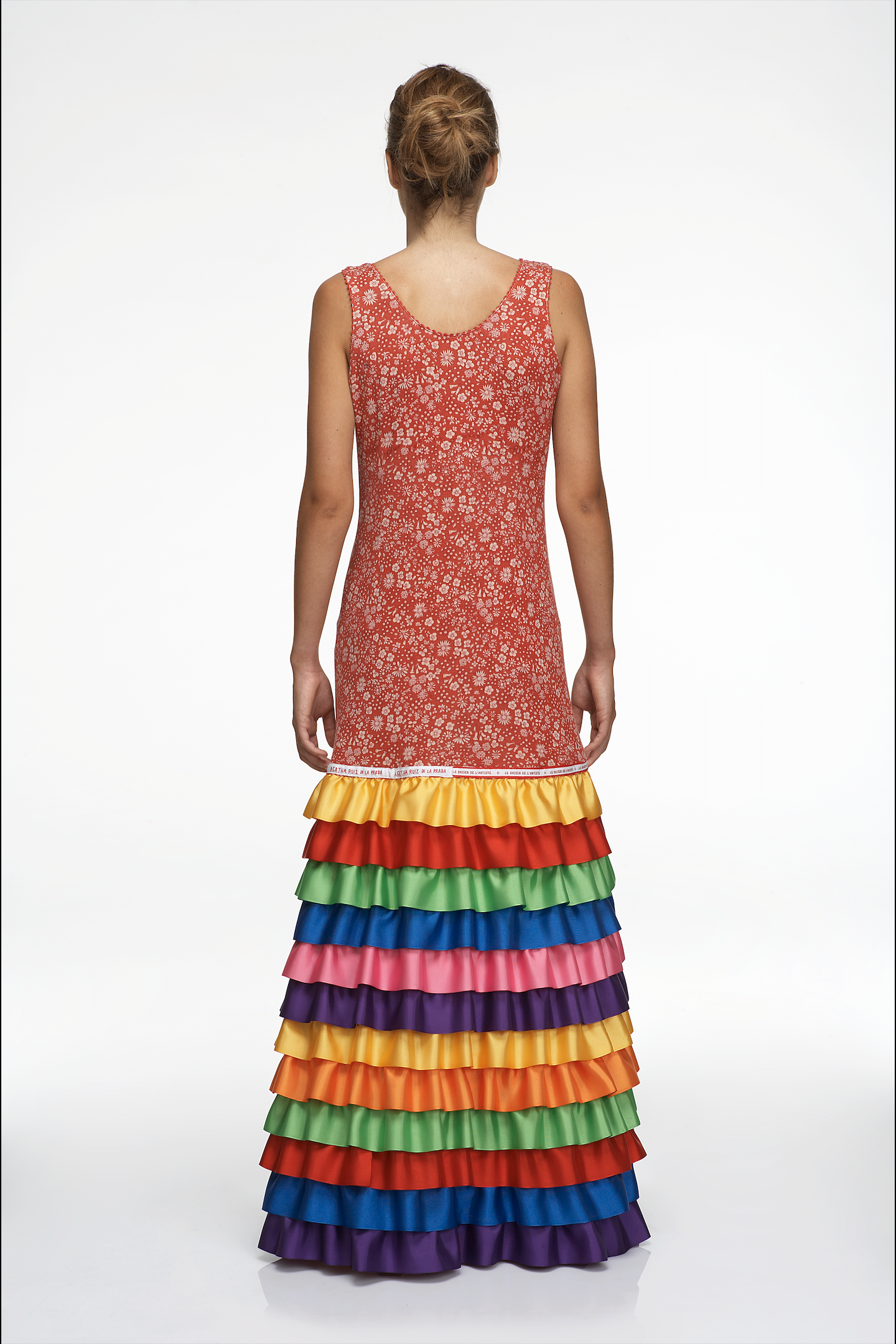
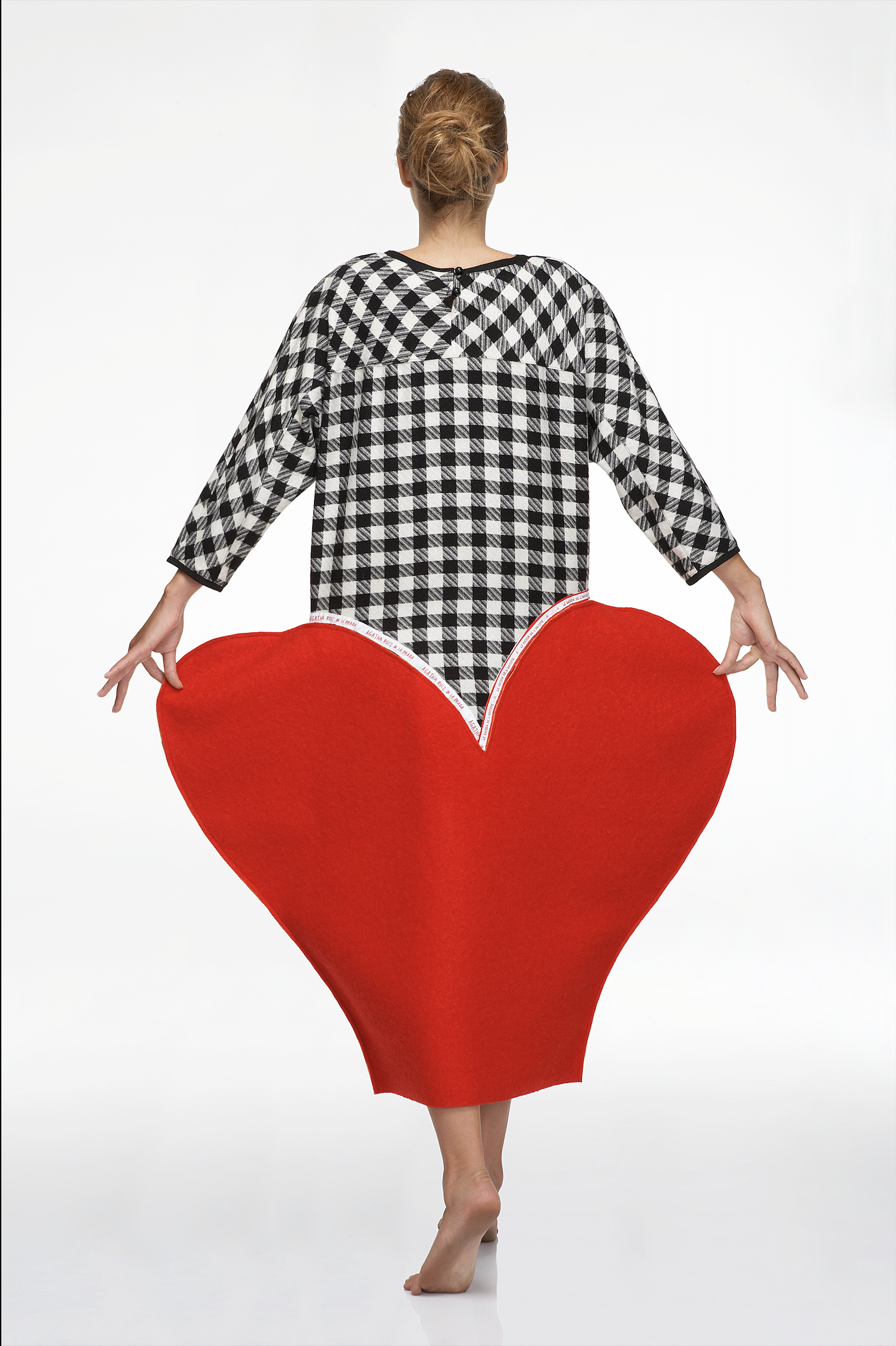
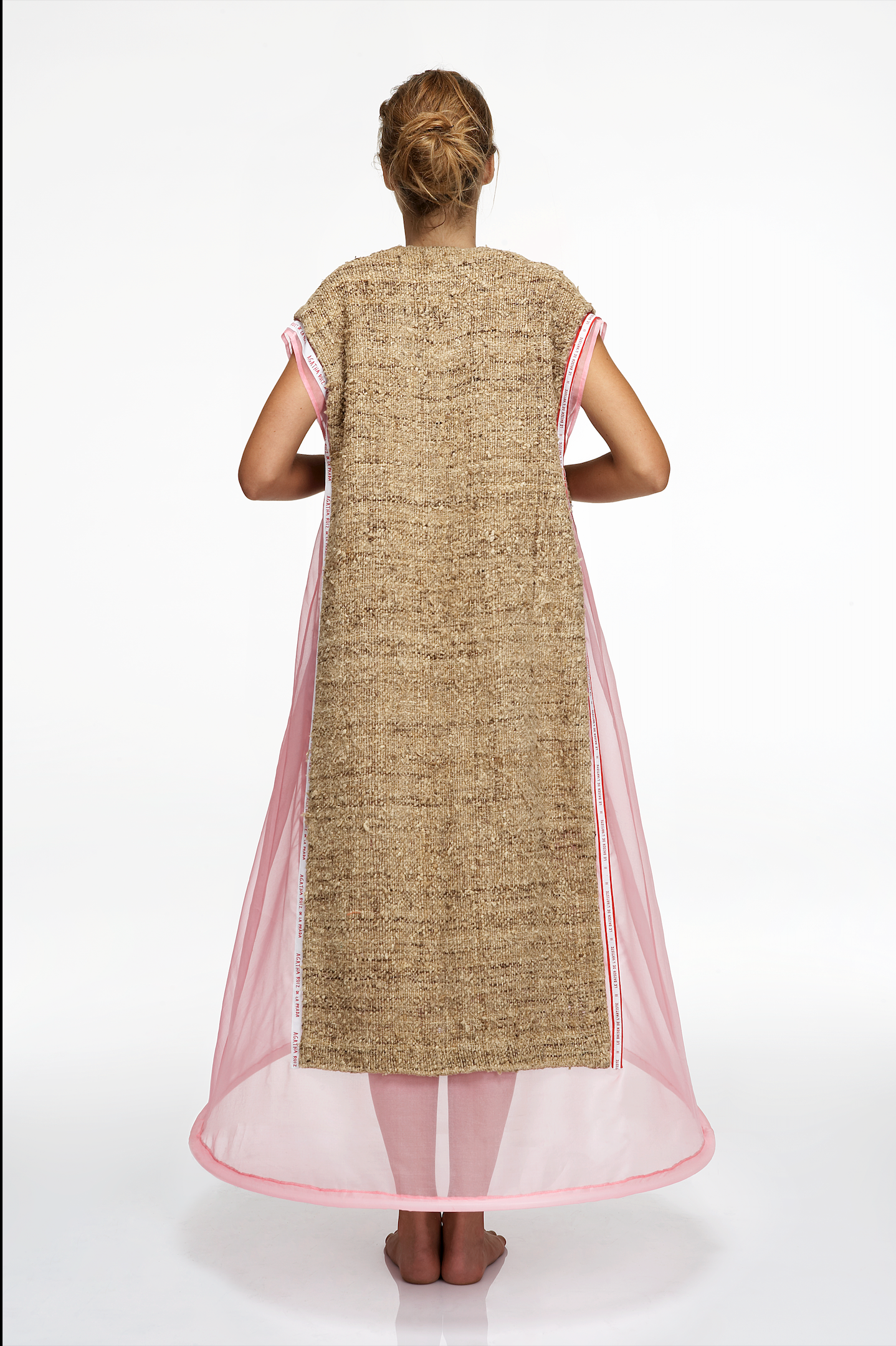
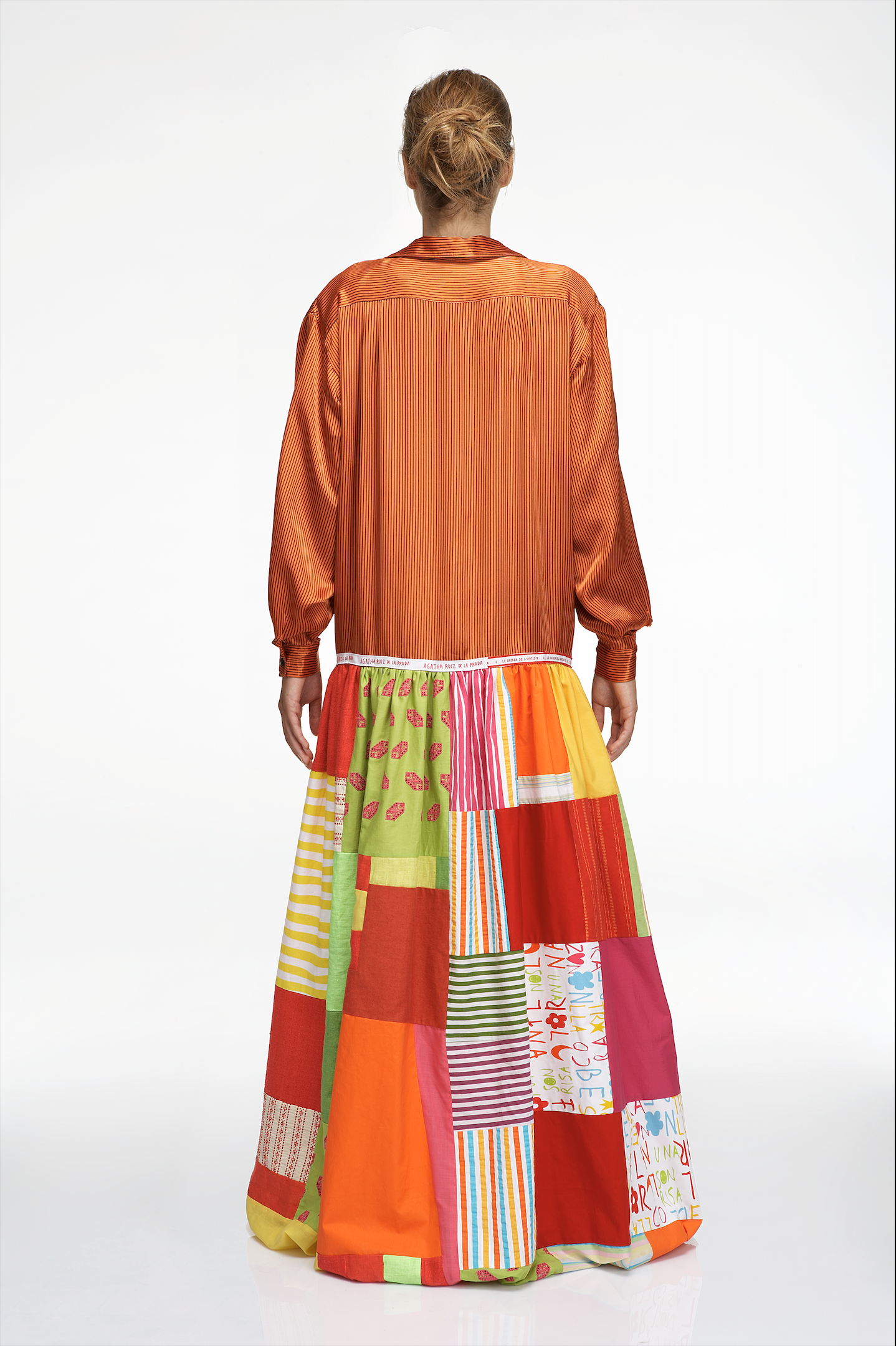
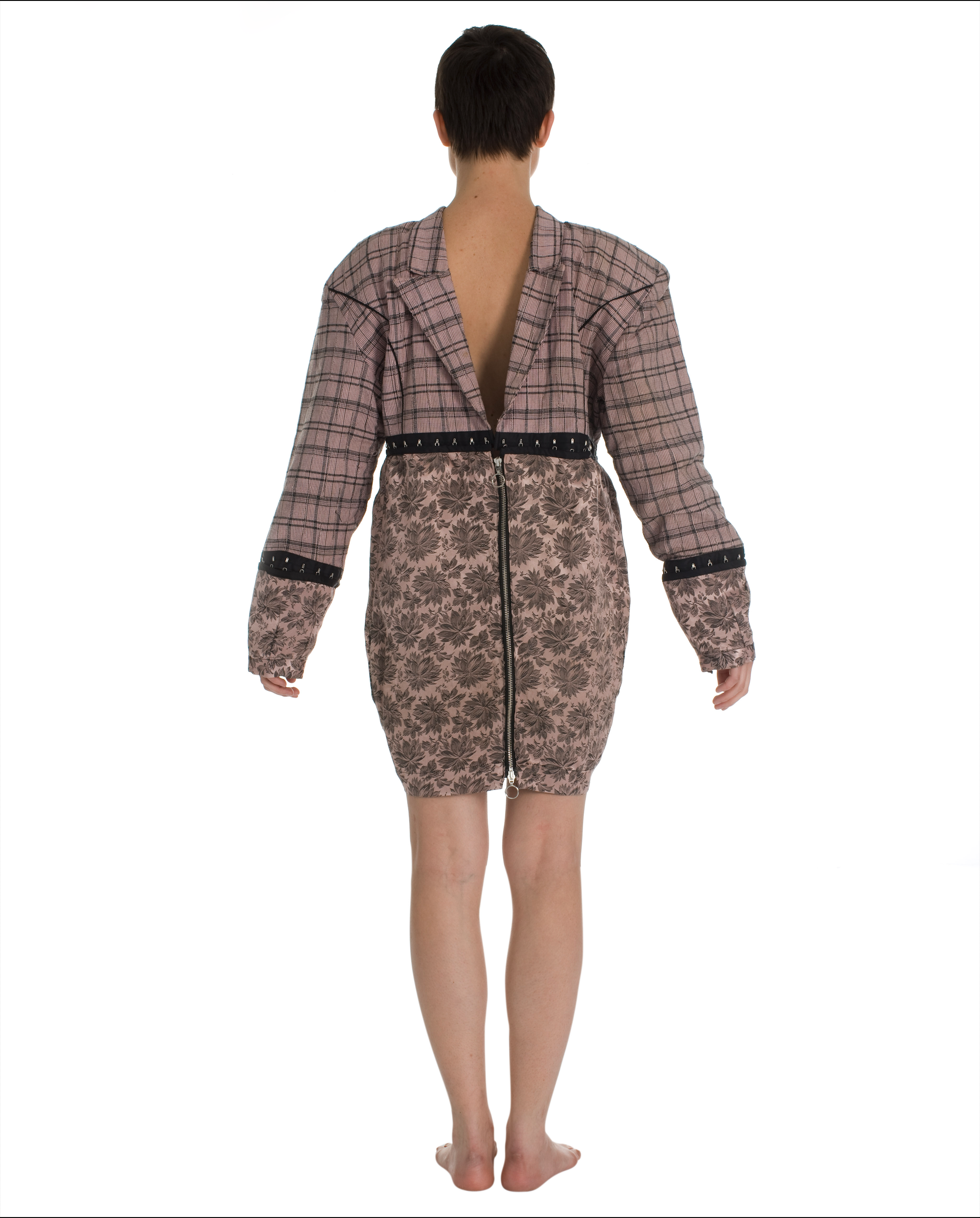
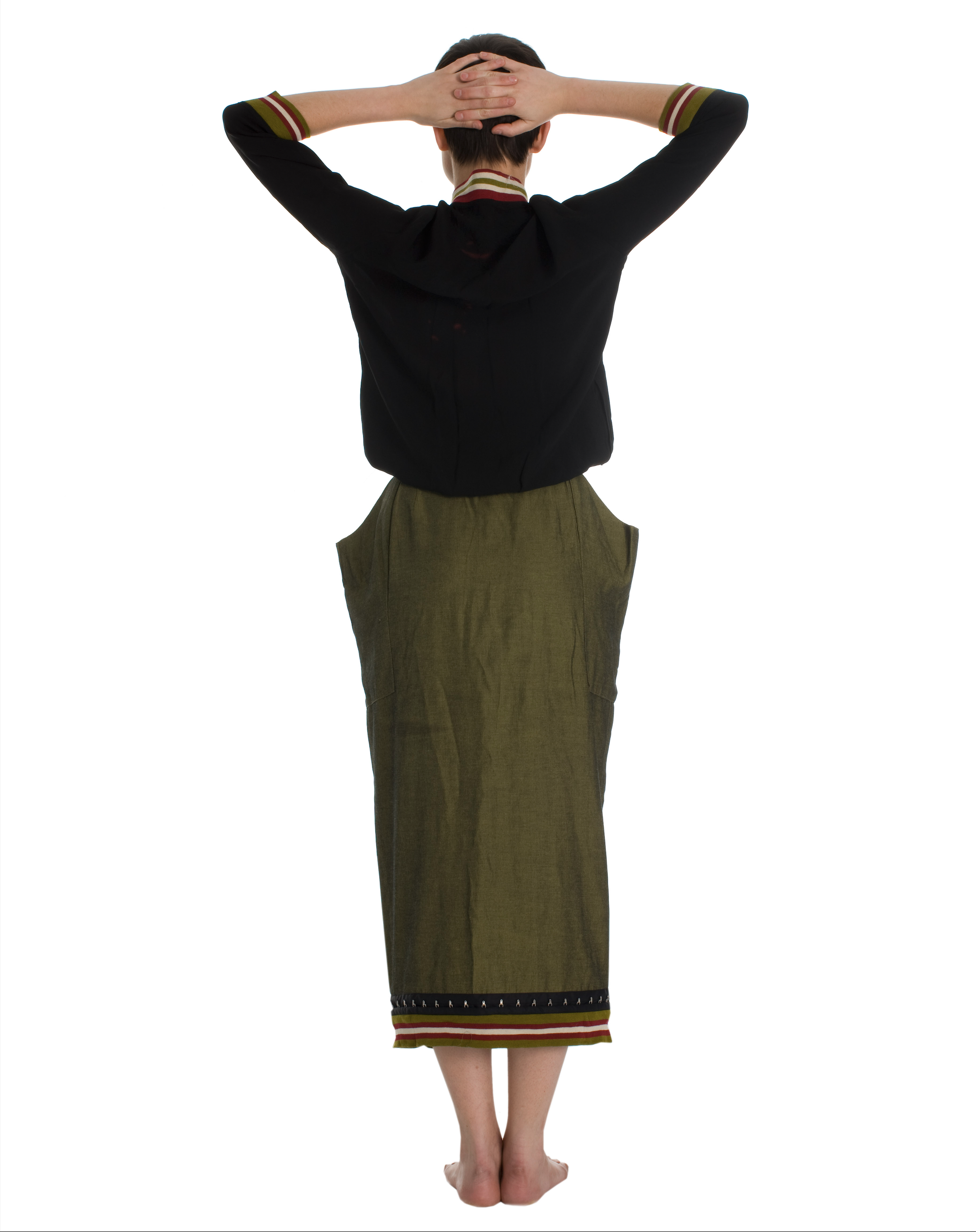
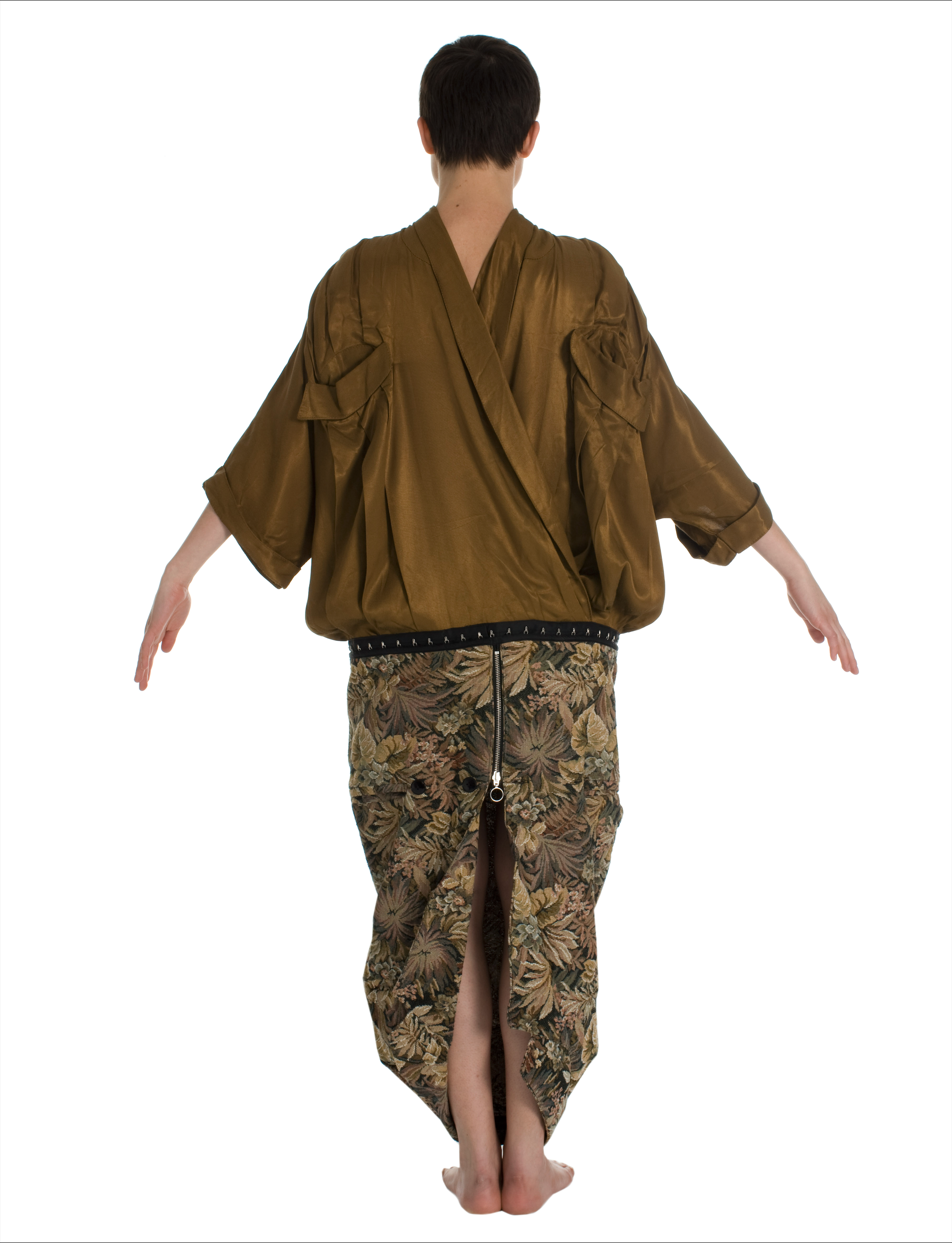
In 2009, ORLAN created the installation Suture-Hybridation-Recyclage, in which she hybridized her wardrobe following the same protocol with David Delfin, Maroussia Rebecq and Agatha Ruiz de la Prada, asking them to find a way of assembling two of her different garments to bring together times, materials, designers and moments in her history. Maroussia Rebecq has cut two garments and attached a small fluorescent yellow lace to bring them together, while David Delfin has attached ribbons full of staples, enabling them to be detached and reattached to another garment, creating a hybridization, or rather a temporary assembly and multiple shifting hybridizations.
Agatha Ruiz de la Prada proposed a more radical solution. She carefully selected beautiful dresses from her museum, cut them in half and then split ORLAN’s garments in half from the waist down and assembled them.
So each dress was recomposed with half an Agatha Ruiz de la Prada dress, and half dresses from ORLAN’s wardrobe, whose designer I don’t necessarily know. ORLAN has kept her entire wardrobe since adolescence.
On May 30, 1990, in a deconsecrated church called “All Saints” in Newcastle, England, ORLAN announced, during an inaugural ritual performance, her decision to undertake the Surgical-Performance Operations by reading her “Carnal Art” manifesto, which she had written in 1989.
LA RÉINCARNATION DE SAINTE-ORLAN OU IMAGES NOUVELLES-IMAGES DITES OPÉRATIONS-CHIRURGICALES-PERFORMANCES, is a series of 9 performances created by ORLAN between 1990 and 1993 in Paris, Brussels and New York. ORLAN created this series to derail surgery from its habits of enhancement and rejuvenation, and to perform surgical operations that weren’t supposed to bring beauty, but ugliness, monstrosity and indesirability.
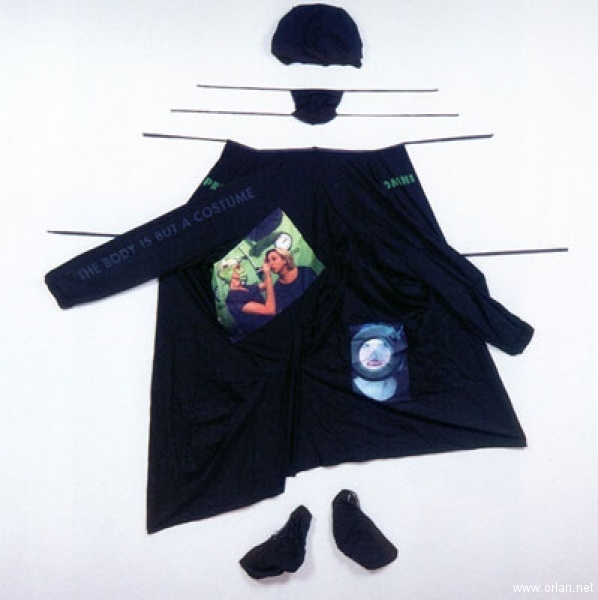
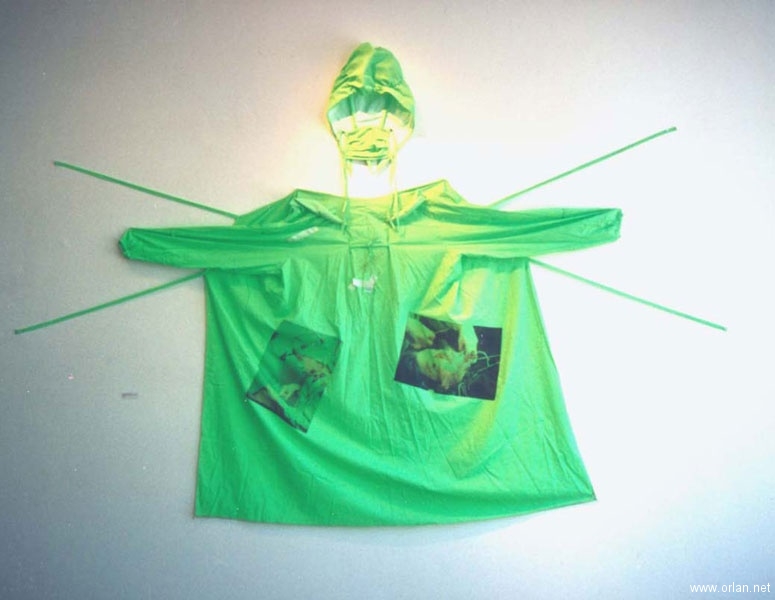
The central idea behind these surgical operations was to combat stereotypes and models. ORLAN is not against cosmetic surgery, but against what we do with it. She uses this technique to invent the self-love by attacking the mask of the innate. The first condition with the different surgeons was no pain, because ORLAN is all for BODY-PLEASURE. For each performance, ORLAN decorated the operating theatre, turning it into her artist’s studio. She and the rest of the medical staff were costumed by a renowned designer working in collaboration with the artist. The performances were orchestrated by readings, and when the surgical gesture allowed it, ORLAN produced images, films, videos, photos, drawings with her blood and fingers, reliquaries with her fat and flesh, “holy-suaries” of sorts made with her dried blood and medical gauze from the operation onto which she made photographic transfers, and objects subsequently exhibited in museums and galleries.
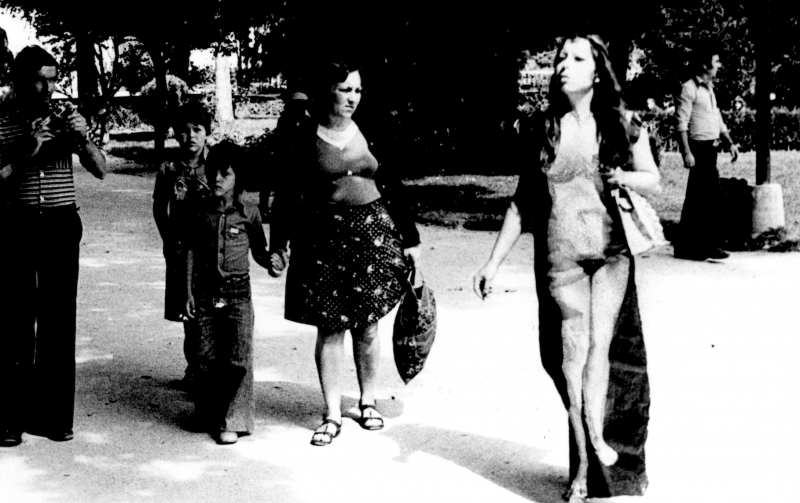
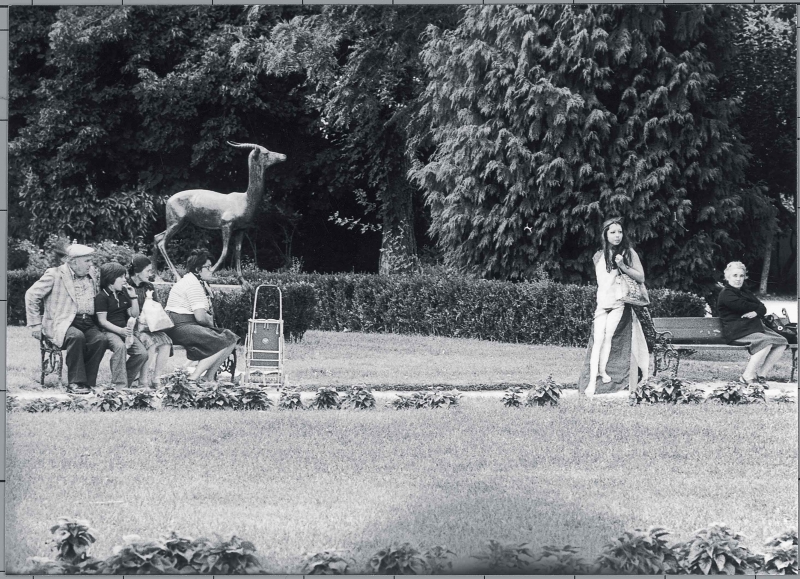
Dressing in One’s Own Nudity, Caldas da Rainha, Portugal, 1976–77
In the performance S’habiller de sa propre nudité (1976-77), ORLAN wanders through public gardens in Portugal, wearing a photograph of her naked body in the form of a photographic canvas dress covering her entirely.
Police officers wanted to charge her with exhibitionism, but it was impossible because ORLAN was dressed from head to toe and had her identity papers in her bag.
In the public space, others are confronted with the representation of her nudity, without her actually being naked. ORLAN highlights this same gap in public life, where others represent rather than present themselves. In this sense, performance acts on real space, disrupting the relationship with the other and making the encounter critical. ORLAN seeks to get closer to the environment, to objects that mediate encounters with the other, and to create by challenging and disrupting the law without condemning it.